
El universo de Henri Plaat
VIERNES 25 AGO / 19:00h
CENTRO CULTURAL D. MADRAZO
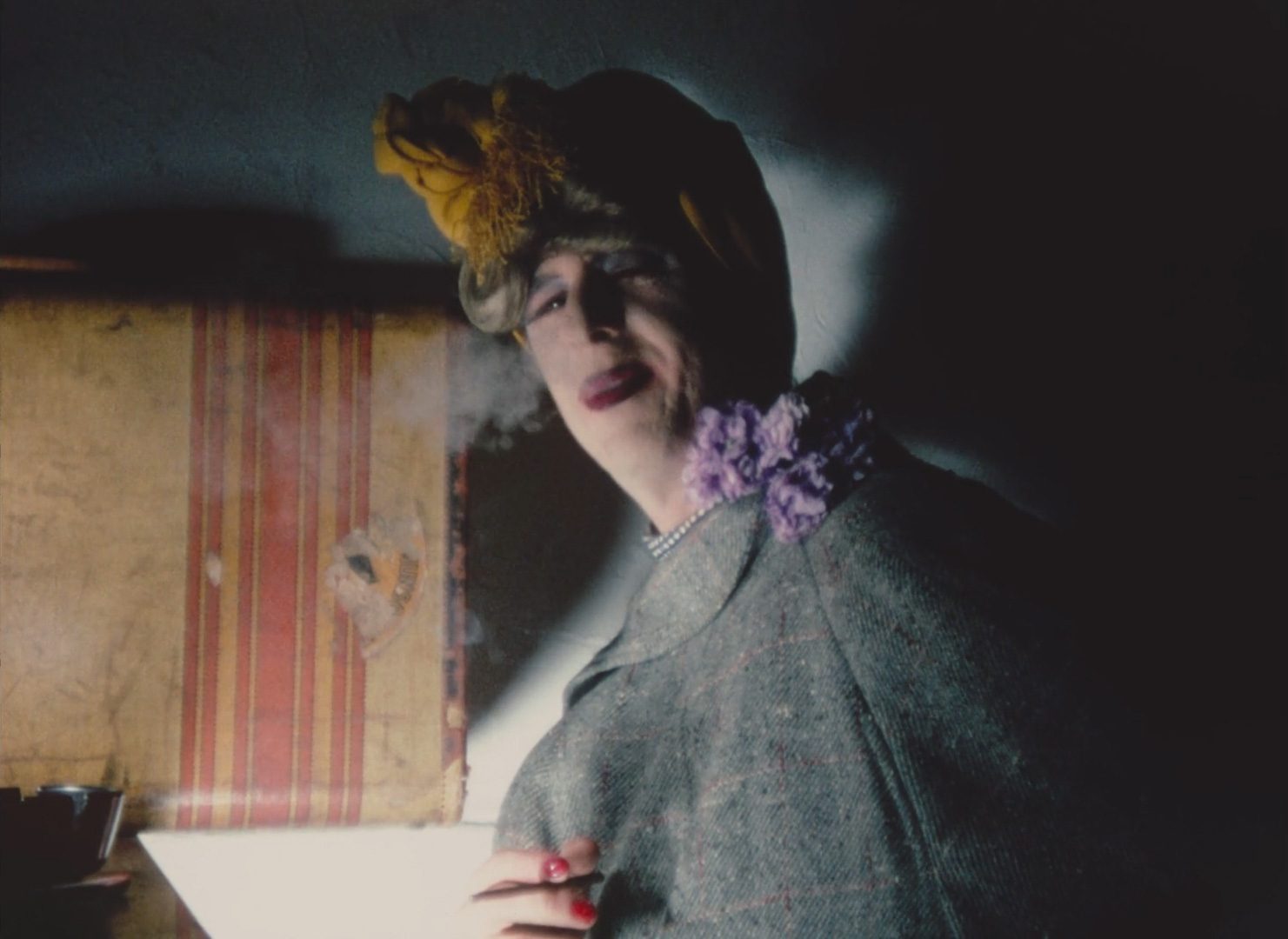
– The Strange But Unknown Star (1969), 16mm, color, sonora, 8 min.
– Laughter in the Rosary! (1973), 16mm, color, sonora, 6 min.
– Absurd (1973), 16mm, color, sonora, 2 min.
– Fashion from New York (1980), 16mm, color, sonora, 8 min.
– Spurs of Tango (1980), 16mm, color, sonora, 32 min.
– Fragments of Decay (1983), 16mm, color, sonora, 12 min.
– Second War Hats (1986), 16mm, color, sonora, 4 min.
Formato de proyección: HD
The title sequence and the accompanying music introduce the spectator to an atmosphere of classical Hollywood movies. The star is a little girl, dressed as a diva from the 1930s. She wears a rubber mask, and gives a performance sitting in a red club chair and reading magazines in which fi lm stars of decades ago come to life again. We hear Annette Hanshaw singing, while Marlène Dietrich appears behind a mixture of eggs, chocolate powder, sugar and raisins.
* * *
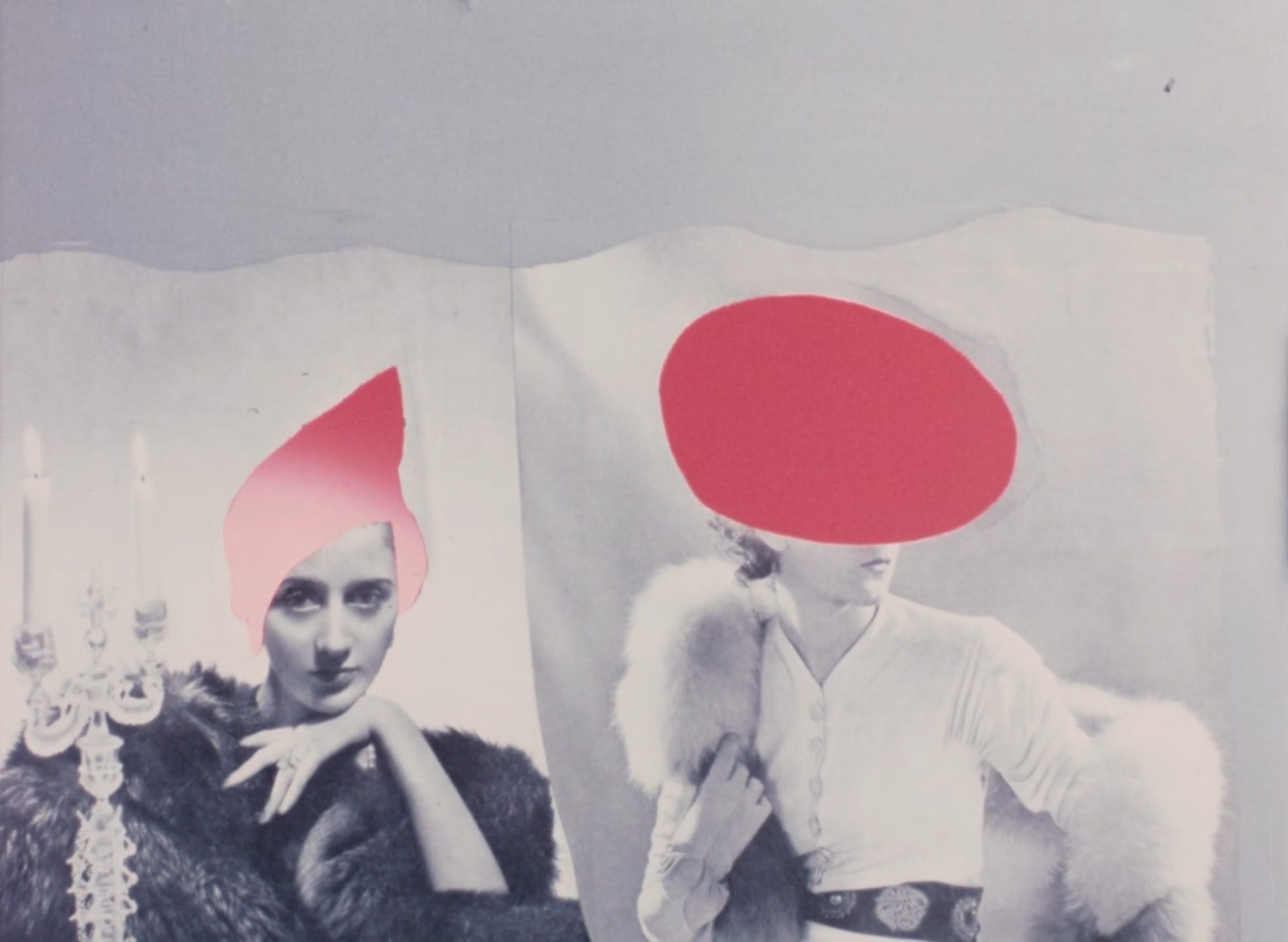
Edited as counterpoint to the Adagio of Beethoven’s 4th Symphony we see a collage of realistic images of New York, surrealistic indoor shots and posing fashion models, with references to aphroditism and transvestism. The rough and sometimes enigmatic images serve as a counterpoint to the controlled harmony of the music.
From the left-overs of the fi lms Henri Plaat made during his many travels, he made this fi lm as an improvisation on deterioration and decay. Observation of ruins, coloured surfaces, and light and shadow alternate with portraits of elderly people or dead animals. A world in decay, but also a world of nostalgia, full of signs of time past, of how people created and lived, before it all falls apart again when relationships dissolve and lives evaporate.
THE POETICS OF PLAAT
Las películas de Henri Plaat nos muestran un mundo milagroso y lleno de belleza, pero también repleto de historia, de huellas del pasado y recuerdos de guerra y destrucción. Proceden de un gran número de fuentes: paisajes desolados y viejas ciudades devastadas, arqueología, escritos antiguos, y también documentos anteriores a la guerra: películas, divas cinematográficas y registros sonoros. Plaat observa y ve cosas que para la mayoría de nosotros pasan desapercibidas, pero que él traduce con su rica imaginación a un mundo de fantasía, que se opone a la dureza de la realidad. Las asociaciones libres entre las atrocidades de la Segunda Guerra Mundial, las estrellas de cine de los años 1930 y un mundo en decadencia van de la mano con un sentido del absurdo de resonancias oníricas y una gran potencia imaginativa. Para Plaat, el humor es un antídoto contra la idiotez de las tragedias creadas por los humanos. Describe sus obras como "películas atmosféricas, a menudo fotomontajes con mezclas de sonidos de guerra, ruido de aviones, la voz de Zarah Leander, música de Wagner... solo fragmentos, que conducen a efectos sorprendentes".
Henri Plaat viajó mucho, a Grecia, Oriente Medio, India, Estados Unidos y América del Sur. En el curso de sus viajes empezó su fascinación por los “lugares del pasado”, caracterizados por la decadencia y la destrucción. Registró en la película lo que veía y montó los fragmentos silentes en forma de cine visual puro. Al igual que sus dibujos, collages y gouaches, las películas de 16 mm de Plaat combinan la imaginación con la realidad. “Me encantan los colores de las paredes azotadas por la intemperie, las manchas, los puntos de humedad, la corrosión. Creo que hay belleza en las manchas de humedad en una pared blanca y en los desconchones en los revocos”.
Sus películas destacan por su refinamiento visual, composición, uso de la luz y el color y momentos de poesía. Nunca son películas narrativas, sino que crean una atmósfera poética de asombro que seduce al espectador por su carácter lúdico, que con frecuencia proviene de la improvisación y la experimentación visual. Su proceso de edición contribuye a este efecto lúdico, ya que a menudo renuncia a utilizar la mesa de montaje. “Cuando me devuelven todo del laboratorio, corto las tomas sueltas y las cuelgo en un tendedero en la habitación. Luego empiezo a moverlas, deslizándolas de un lado a otro de la línea. Eso puede durar una semana, a veces un poco más, especialmente si notas que falta algo”.
Henri Plaat (nacido en Amsterdam en 1936) se formó como artista visual y ha desarrollado una carrera extremadamente rica y versátil, incluyendo obra gráfica, dibujo, gouache, collage y más de cuarenta y cinco películas. Empezó a hacer cine en 1966, primero en 8 mm y luego en 16 mm. Su interés por el cine vino determinado por las características visuales de la película diapositiva Kodachrome y Tri-X. Estas películas le permitían trasmitir su predilección por la luz, la sombra y el color. Con la excepción de Moroccan Light, que se rodó en negativo de color, todas las demás películas de estos programas fueron rodadas con película diapositiva. Cuando Kodak dejó de producir Kodachrome en 2009 y se redujo la calidad pictórica de las películas, Plaat también perdió su interés en hacer cine. Las nuevas restauraciones digitales proceden del escaneado de los materiales originales.
The films of Henri Plaat show us a world that is miraculous and full of beauty, but also a world replete with history, traces of the past and memories of war and destruction. He draws from a multitude of sources: desolate landscapes and dilapidated old cities, archaeology, ancient writings, but also pre-war films, film divas and sound recordings. Plaat observes and sees things which for most of us remain unnoticed, but which he translates with his rich imagination into a world of fantasy, resisting the harshness of reality. Free associations between the atrocities of World War II, film stars of the 1930s, and a world in decay go hand in hand with dream-like absurdism and great imaginative power. For Plaat, humour is an antidote to the idiocy of human induced tragedies. He describes his films as ‘atmospheric movies, often photomontages with mixes of war sounds, airplane rumble, Zarah Leander's voice, Wagner's music... all fragments, leading to amazing effects’.
Henri Plaat travelled a lot, to Greece, the Middle- East, India, the United States and South America. During his travels his fascination began for ‘places of the past’, characterised by decay and destruc- tion. He recorded on film what he saw and edited the silent fragments into pure visual cinema. Like his drawings, collages and gouaches, Plaat’s 16mm films blend imagination with reality. ‘I love the colours of weather-beaten walls, patches, damp spots, corrosion. I think it’s beautiful when damp patches appear on a white wall and layers under the plaster flake loose.’
Every film stands out in terms of its visual refine- ment, composition, the use of light and colour and moments of poetry. His films are never narrative, but create a poetic atmosphere of wonder and appeal to the spectator through their playfulness, which is often the result of improvisation and visual experimentation. His editing process contributes to this playful effect, as he often avoided assem- bling his film on an editing table. ‘When I have received everything back from the laboratory, I cut the shots loose and hang them on a large washing line in the room. Then I start moving them, sliding them back and forth across the line. That can take a week or sometimes a little longer, especially if you notice that something needs to be added.’
Henri Plaat (born in Amsterdam in 1936) was trained as a visual artist and created an extremely rich and versatile oeuvre of graphic work, drawings, gouaches, collages and more than forty-five films. He started to make films in 1966, first on 8mm and later on 16mm. His interest in film was strongly motivated by the visual qualities of Kodachrome and Tri-X reversal stocks. These stocks could translate his preference for light, shadow and colour. With the exception of Moroc- can Light, which was shot on colour negative, all films mentioned below were shot on reversal stock. When Kodak discontinued the production of Kodachrome in 2009 and the painterly quality of the film stock decreased, Plaat lost also his interest in making films. For the new digital restora- tions the most original material was scanned.
Mark Paul Meyer
Traducción de textos: Javier Oliva