
Jan Decorte. El gesto condensado
Programa 2: Hedda Gabler (1978)
SÁBADO 28 NOV / 17:30h
FILMOTECA DE CANTABRIA
Hedda Gabler
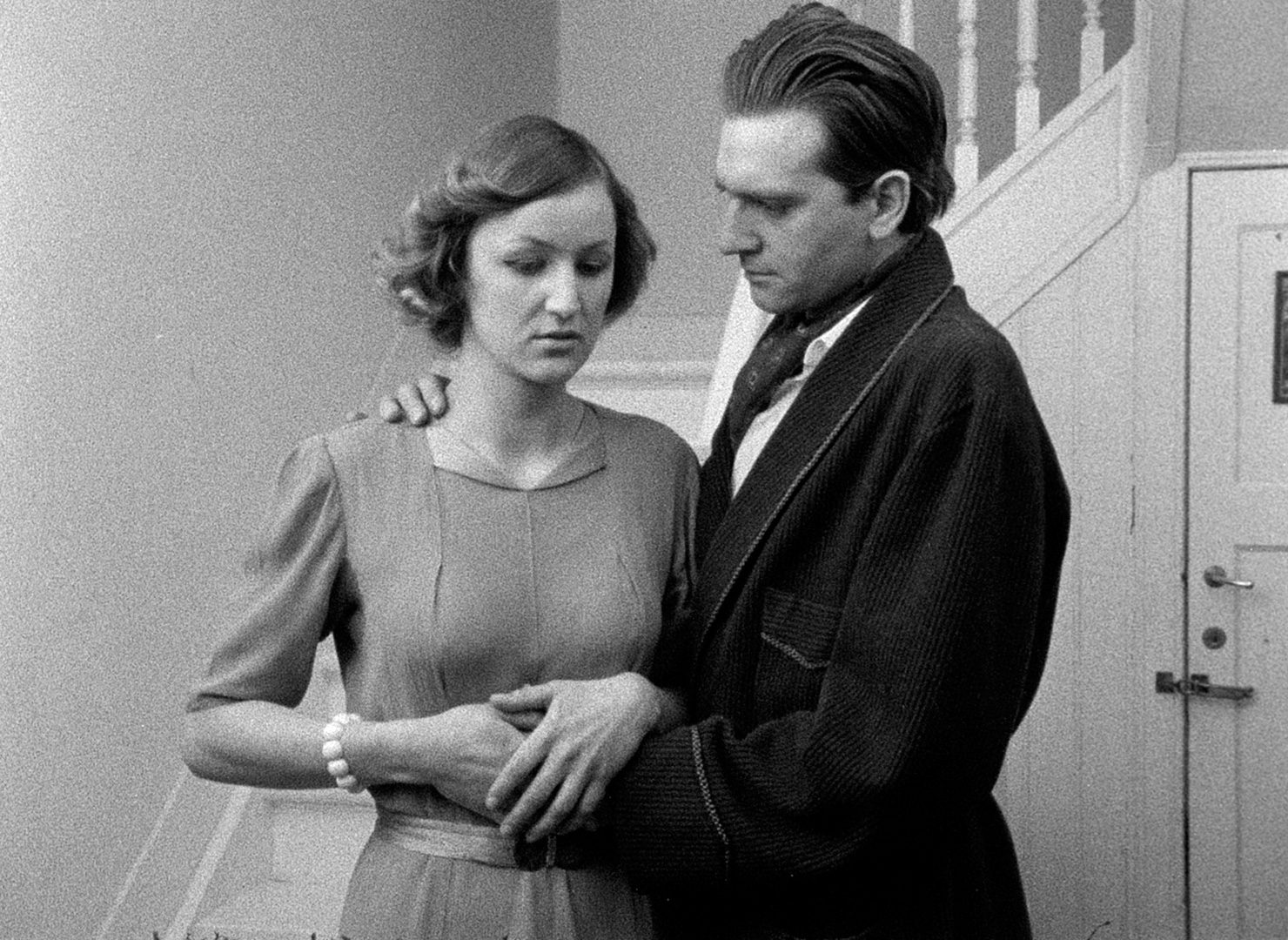
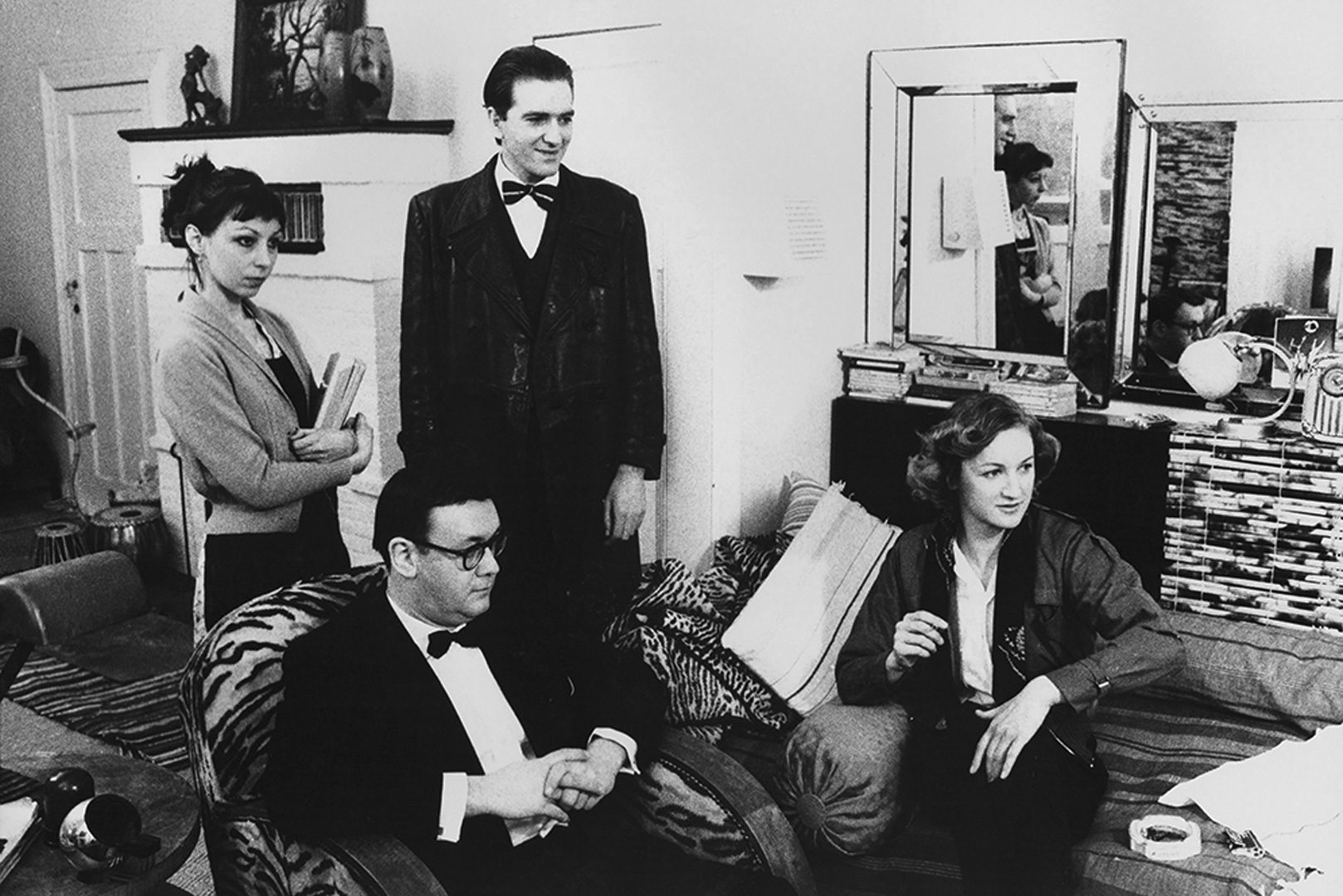
La planta baja de una villa: las ventanas dan al jardín. Arquitectura: años 30, diría yo, por los amplios arcos de la puerta de la terraza y la hermosa chimenea, por las paredes pintadas de blanco que dan a esta estancia una dimensión tan espectacular (que se contradice constantemente por cómo está habitada). Dos sillones enormes y difíciles de manejar, cubiertos con un motivo atigrado (colonial). Un panorama embarazoso, pero muy estimulante. Sentarse en ellos supuso para los actores un problema mayor que decir sus líneas de diálogo, mantener el ritmo y la postura ante la cámara. Ya no podemos (o tenemos miedo de) imaginar a personas en asientos así. Por tanto, los actores no están sentados, sino que dicen su texto sentados. En lo profundo del sillón, parecen haberse sentado en el borde.
Una pequeña zona de estar con un banco apoyado en la pared: una referencia a lo rural, a la informalidad, que establece asociaciones con posadas y bancos de terraza. ¡El lugar de descanso de un paseo por tu interior! A tu derecha, cuando estás sentado en ese banco, hay una puerta que da al recibidor. Un parapeto te protege de corrientes de aire y de miradas. También hay una mesa de cocina con sillas, muy lejos de la zona de estar y de los sillones con estampado atigrado. Allá, bajo el ala de la modernidad (los sillones) y lo rural (la zona de estar), está el equipamiento de lo social, de la representación; aquí, en la mesa, está lo doméstico, en lo que ninguno de los intérpretes quiere implicarse. En varias ocasiones permanecen ostentosamente alrededor de ella, y empiezan a actuar a la defensiva. Lo doméstico se utiliza como chantaje. No es casualidad que Tesman y Elvsted estén sentados a esa mesa cuando intentan reconstruir el manuscrito quemado: tareas domésticas y moralidad bajo una lámpara de cocina.
*
Martes 30 de enero en el Museo del Cine: “estreno mundial” (¿por qué desperdiciar los bellos rituales de Hollywood? ¡Utilicémoslos!) del tercer largometraje de Jan Decorte (sin incluir su Gombrowicz).
En la taquilla cojo un folleto: créditos, sinopsis y filmografía del cineasta. Supongo que el texto fue escrito por el propio Decorte: sin duda marca el tono adecuado.
Frases cortas con una sintaxis muy elemental. No hay conjunciones para justificar el contenido en conjunto. Cada frase podría ser el comienzo de una historia: ninguna de ellas tiene ese sonido especial de “primera frase”, como ocurre con las imágenes de la película. Todas las partes de la historia de Ibsen siguen ahí, pero ya no están en el orden correcto, ni siguen la jerarquía correcta. Se ha perdido la distinción entre la narración funcional y los momentos destacados, entre bloques de construcción y síntesis. No como para dar lugar a una historia alternativa, a otra cara de la misma historia. Ese tipo de reinterpretación crítica es demasiado afirmativo. La “novela de interpretación” (“el pequeño secreto” del psicoanálisis, el secreto público de la “lucha de clases”) es la ficción de toda una generación de reformadores. Es tan atractivo, o tan poco atractivo, como la propia ficción de Ibsen. El resultado aquí es un irónico “análisis asilvestrado”, a un tiempo crítico y lleno de clichés. Fassbinder ya intentó algo similar, aunque con mucha más fascinación por la “novela de interpretación” que Decorte.
*
En ese mismo folleto se hace referencia a los personajes por su nombre completo, o por “él”, “ella” o “ellos”, lo que produce un efecto de distanciamiento. No hay promiscuidad con estos personajes de ficción. Y los actores también interpretan de esta manera: actúan al borde de sus personajes, igual que se sientan en el borde de los sillones, objetivamente, a distancia, pero también por ello con una intensidad mayor.
Es una especie de distancia acrobática, aquí en Hedda Gabler, la que nos hace mantener la respiración en suspenso (¡la actuación es maravillosa!) hasta que la risa la libera. Hay una narración farfullante de una historia tremendamente inverosímil, una imitación excéntrica de conflictos melodramáticos, un travestismo de desciframiento crítico, que dan lugar a esta contracorriente extremadamente lenta y tranquila, llena de rápidos y cascadas.
Suceden las cosas más improbables. Veamos, por ejemplo, los planos iniciales antes de los créditos recitados: los primeros planos de la escalera de la casa se combinan con una canción colonial “congoleña” interpretada por uno de esos coros masivos de mal gusto. ¡Es tan irreverente una escalera como ésta, tan resonante, tan confusa e incomprensible!
Y está esa conmovedora y cómica escena de amor entre Hedda Gabler y Thea Elvsted. Que incluye una solución sorprendente para este tipo de situación: “solución” tanto en el sentido de descubrir como de disolver. Juntos en un diván, se susurran de forma ininteligible, llenos de excitación. Willem Jan Otten, que quedó muy impresionado (en Vrij Nederland, el 17 de febrero de 1979), los calificó de “muy cómicos, desapasionados y evidentes”.
*
Al final de la película hay un plano particularmente “amplio” (en lugar de “largo”). En la parte delantera, a la derecha, Hedda Gabler está sentada en una silla y Bracke está de pie detrás de esa silla. Ambos están mirando en silencio una fuente de luz que proviene de fuera de la imagen y solo los ilumina a ellos dos. El resto de la habitación está envuelto en la oscuridad, excepto la mesa de la cocina ya mencionada, que está al fondo a la derecha. Una lámpara de cocina sirve como foco de luz contra el cual se recortan las dos figuras de Tesman y Thea. Están hablando, discutiendo y trabajando en el manuscrito quemado.
Esta puesta en escena, que es también símbolo de una situación dramática y del desarrollo de sus relaciones, se ve progresivamente socavada por la duración del plano. Cada vez se nos van imponiendo más detalles, elementos y objetos, haciendo que el conjunto se desmorone. La duración del plano hace trivial el simbolismo y el significado, y centra nuestra atención en los bloques constructivos. Va completamente en contra del recorrido clásico de la apreciación estética, que ante todo demanda admiración por la construcción y la encarnación de significados (considerando probablemente absurdo y perverso retroceder hasta sus componentes básicos). En un plano tan largo y sostenido, el significado parece banal, un truco, un cliché, un mecanismo de irritante trivialidad. Lo fascinante y lo importante está en otra parte: radica en liberar a las cosas en el espacio de su ocupación y su explotación por el “significado”.
Lo que nos sucede entonces –los primeros párrafos de mi texto son un ejemplo notable– es un tipo de participación espacial muy fuerte. En lugar de identificación afectiva hay una especie de sensación espacial: estar en un lugar, sentarse y estar de pie, tomar asiento y posarse (en las películas de Decorte, la cámara y la imagen también “se posan”). Ese es el dominio de nuestra sensibilidad.
*
No es casualidad –creo ahora que, después de su tercera película, porque sus películas parecen complementarse y aclararse bastante bien entre sí–, no es casualidad que el debut de Decorte fuera una nature morte. Las naturalezas muertas, uno de los géneros menores de la pintura, son similares al tableau du genre, que también podría dar una clave para estas películas. Naturalezas muertas: situar objetos en el espacio, situar a las personas también como objetos, no como personajes en un tiempo narrativo.
Nature morte es naturaleza en el estudio, naturaleza artificial, composiciones de frutas, objetos y animales sin ninguna pretensión de naturalidad. Es lo radicalmente opuesto a los paisajes. Que no aparecen en las películas de Decorte, ¡y quién puede resistirse a las imágenes de paisajes en el cine! Son todas interiores, con una tensión espacial muy fuerte. Y son diferentes a la mayoría del cine contemplativo, que mira el espacio frontalmente, con distancia, como si fuera un friso. Aquí, sin embargo, se preserva el espacio dinámico clásico de la ficción y el suspense, tanto en su movilidad como en su dramatismo, y se sondea y explora su complejidad. El dramatismo como nature morte.
Esto es lo que lo hace parecer tan “difícil”, la combinación de rasgos estilísticos aparentemente contemplativos y el suspense de la puerta, el patetismo de los dúos y tríos, la tensión melodramática entre presencia y ausencia. Todos estos trucos dramáticos, estas bagatelas de ficción, ni siquiera aparecen empañadas, sino que están observadas de cerca. Entre el drama y la observación se crea una tensión llena de mal gusto, una obstinación irritante, y ofensivas combinaciones de estilos. "¡He perdido el manuscrito!" ¡En casa de la señorita Lili! "¿Por qué hiciste eso?" “¡Él se pegó un tiro en el pecho!” "¡Ella se suicida!" (Si esta última frase dijera “ella también se suicida”, uno se daría cuenta inmediatamente del efecto de estas películas. El “también” te hace sensible a la repetición y la acumulación y, por lo tanto, a la trivialidad de lo que retorna como una falta de imaginación.) Todas estas exclamaciones y peripecias realmente no significan nada. Nada más que lo que dicen literalmente. Mostrar este aspecto literal de los mecanismos dramáticos: de eso trata el cine de Jan Decorte.
Dirk Lauwaert
The ground floor of a villa – the windows look onto a garden. Architecture: 1930s, I’d say, for the wide arches of a terrace door and a beautiful fireplace, for the white-painted walls that provide this room with such a spectacular dimension (constantly contradicted by the details of how it is inhabited). Two massive, unwieldy armchairs, covered with a – colonial – tiger motif. Awfully awkward, but a very stimulating sight. Sitting in them presented the actors with more problems than their lines, rhythm, posture and the camera did. We can no longer – or we are afraid to – imagine people sitting in such chairs. The actors are therefore not sitting, they are quoting sitting. Deep in the chair, they appear to have taken a seat on its edge.
A small sitting area with a wall-bench: a reference to rurality, informality, associations with inns and terrace benches. The resting place of a walk in the middle of your interior! To your right, when you are sitting on that bench, is a door to the hallway. A parapet protects you from drafts and glances. There is also a kitchen table with chairs – a long way from the sitting area and the tiger-print seats. Over there, under the wing of modernity (the armchairs) and rurality (the sitting area), is the equipment of the social, of representation – here, at the table, is a domesticity that none of the players wants to have anything to do with. On several occasions, they ostentatiously stand around and start acting as the injured party. The domesticity is used as blackmail. It is no coincidence that Tesman and Elvsted are sitting at that table working to reconstruct the burnt manuscript – homemaking and morality under a kitchen lamp.
∗
Tuesday 30 January at the Film Museum: the “world premiere” (why squander beautiful Hollywood rituals? Let’s use them!) of Jan Decorte’s third feature film (excluding his Gombrowicz).
At the box office, I grab a leaflet: credits, synopsis and filmography of the filmmaker. I assume the text was written by Decorte himself: it certainly sets the right tone.
Short sentences with very elementary syntax. No conjunctions to reason the content together. Each sentence could be the beginning of a story: none of them have that special “first sentence” ring to them – as is the case with the images in the film. All parts of Ibsen’s story are still there, but they are no longer in the right order, no longer in the right hierarchy. The distinction between functional narratives and spectacular main moments, between building blocks and synthesis, has gone missing. Not in such a way that it gives rise to an alternative story, a sort of flip side of the actual story. That kind of critical reinterpretation is too affirmative. The “novel of interpretation” (“the little secret” of psychoanalysis, the public secret of the “class struggle”) is the fiction of a whole generation of reformers. It is as or as little attractive as Ibsen’s own fiction. The result here is an ironic “wild analysis” that is both critical and clichéd. Fassbinder already tried something similar, though with much more fascination for the “novel of interpretation” than Decorte.
∗
On that same leaflet, the characters are referred to by their full name or by “he”, “she” or “they”, which has the effect of being very aloof. There’s no promiscuity with these fictional characters. And the actors perform inthis way as well – they act on the edge of their characters in the way that they sit on the edge of those chairs, objectifyingly, at a distance, but all the more intense therefore.
It’s a sort of acrobatic distance, here in Hedda Gabler, that makes you hold your breath in suspense (the acting is wonderful!) until it should be released by laughter. There’s a spluttering retelling of a wildly unlikely story, a kooky imitation of melodramatic conflicts, a travesty of critical unriddling, offering this extremely slow, calm countercurrent full of rapids and waterfalls.
The most unlikely things happen. Take the opening shots before the spoken credits, for instance, in which close-ups of the staircase to the house are combined with a “Congolese” colonial song performed by one of those gaudy mass choirs. It’s so irreverent, a staircase like that, so resonant, so confusing and incomprehensible!
And there’s that touching and comical love scene between Hedda Gabler and Thea Elvsted. Including a stunning resolution to this kind of situation – “resolution” both in the sense of a find and of resolving into elements. Together on a divan bed, they whisper to each other unintelligibly and excitedly. Willem Jan Otten, who was very taken with it (in Vrij Nederland of 17 February 1979), called them “very comical, and unpassionate, and obvious”.
∗
At the very end of the film there’s a particularly “ample” (instead of “long”) shot. In the front right, Hedda Gabler is sitting in a chair, and Bracke is standing behind that chair. Both of them are silently staring into a light source that comes from outside the image and only illuminates the two of them. The rest of the room is shrouded in darkness, except for the already mentioned kitchen table, which is in the back on the right. A kitchen lamp serves as a beacon of light against which the two figures of Tesman and Thea are silhouetted. They are talking, discussing and working on the burnt manuscript.
This mise-en-scène, which is also a symbol of a dramatic situation and of evolved relationships, is gradually undermined by the duration of the shot. More and more details, components and physical elements force themselves upon us, causing the whole to crumble. The duration of the shot trivializes symbolism and meaning and focuses our attention on the building blocks. It’s completely against the classic course of aesthetic appreciation, which chiefly demands admiration for the construction and incarnation of meanings and would probably consider a return to their building blocks nonsensical and perverse. In such a long, sustained shot, meaning seems banal, a trick, a cliché, a mechanism of irritating triviality. What is fascinating and important, on the other hand, is the recapturing of things in space from their occupation and exploitation by “meaning”.
What happens to you then – the first paragraphs of my text are a striking case in point – is a very strong spatial kind of participation. Instead of affective identification there is a kind of spatial experimentation: being somewhere, sitting and standing, taking a seat and posing (in Decorte’s films, the camera and the image are “posing” as well). That is the domain of your sensitivity.
∗
It is no coincidence – I now think, after his third film, because his films seem to complement and clarify each other quite well – it is no coincidence that Decorte made his debut with a nature morte. Still lifes, one of the lesser genres of painting, are akin to the tableau du genre which could also serve as a key to these films. Still lifes: situating objects in space, situating people as objects as well, not as characters in narrative time.
Nature morte is nature in the studio, artificial nature, compositions of fruits, objects and animals without any pretence of naturalness. It is the radical opposite of landscapes. Which aren’t found in Decorte’s films – and who can resist landscape images in film! They are all interiors, with a very strong spatial tension. And they’re unlike most contemplative cinema, which looks at space frontally with a frieze-like distance. Here, however, the classic dynamic space of fiction and suspense, both mobile and dramatic, is preserved, its complexity sounded out and explored. Dramaticism as nature morte.
This is what makes him seem so “difficult”, the combination of outwardly quite contemplative stylistic features and the suspense of the door, the pathos of duos and trios, the melodramatic tension between presence and absence. All these dramatic tricks, all this bric-à-brac of fiction is not even tarnished, but is instead closely observed. Between drama and observation, a tension is created, full of bad taste, irritating recalcitrance, shocking style combinations. “I’ve lost the manuscript!” “At Mademoiselle Lili’s!” “Why did you do that?” “He shot himself in the chest!” “She is committing suicide!” (If this last sentence would be phrased as “she is committing suicide too”, you’d immediately sense the effect of these films. The “too” makes you sensitive to repetition and accumulation and thus to the triviality of that which returns as a lack of imagination.) All these exclamations and peripeteias really mean nothing. Nothing but what they literally say. Showing this literal aspect of dramatic mechanisms, that is what Jan Decorte’s cinema is all about.
Dirk Lauwaert
Traducción de texto: Javier Oliva