
¡Sin censura! Hollywood Pre-Code
Programa 4: Working Girls (1931)
VIERNES 27 OCT / 19:00h
CENTRO CULTURAL D. MADRAZO
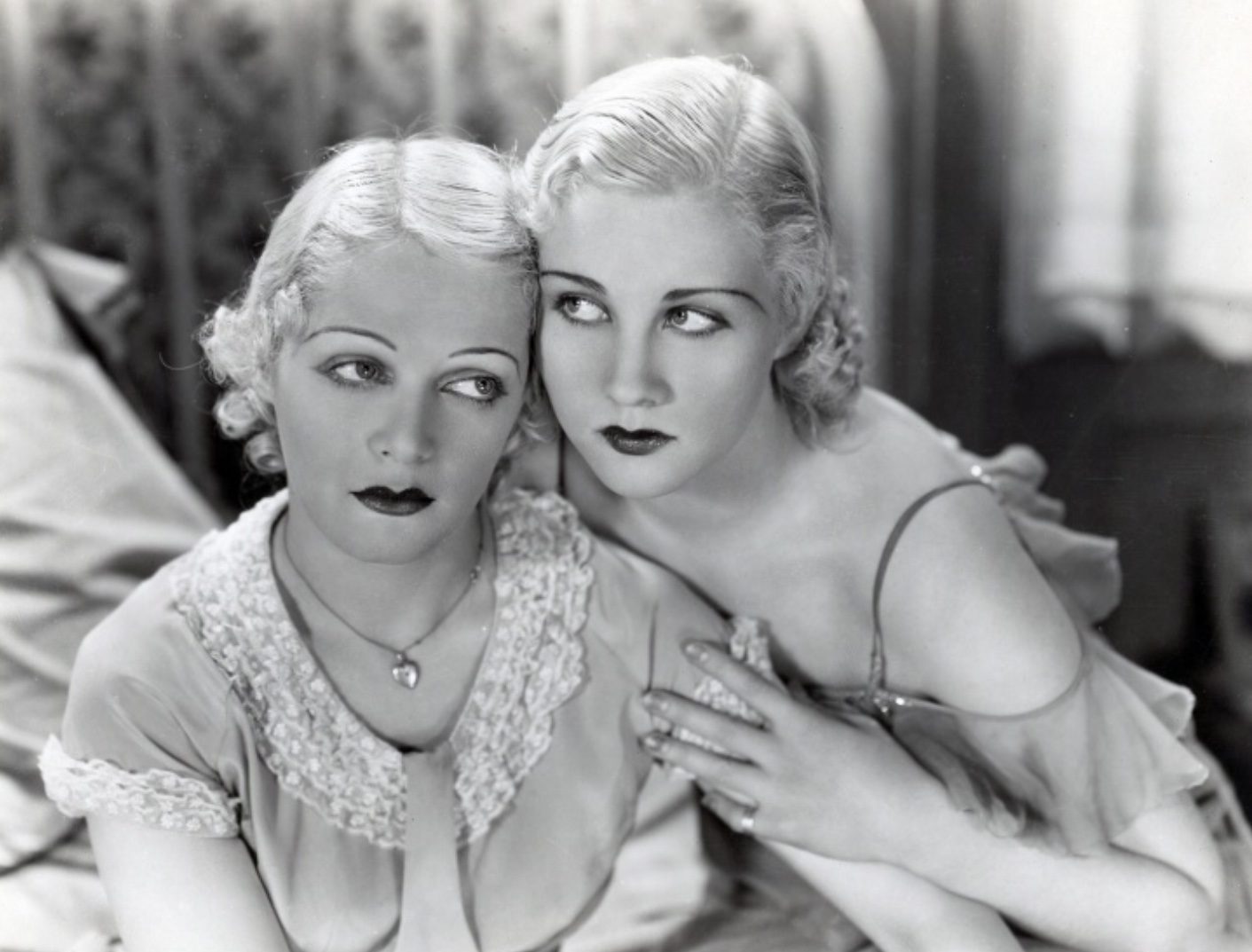
WORKING GIRLS (1931)
WorkingGirls es una película dramática estadounidense PreCode de 1931, dirigida por DorothyArzner y escrita por Zoë Akins, basada en la obra BlindMice, escrita por Vera Caspary y WinifredLenihan. La película está protagonizada por Judith Wood, Charles "Buddy" Rogers, Paul Lukas, Stuart Erwin y Frances Dee. La película se estrenó el 12 de diciembre de 1931 por Paramount Pictures.
Arzner describió más tarde la película (descrita más tarde como un trabajo feminista) como una de sus favoritas, pero la película no recibió mucha atención en un lanzamiento limitado. La película se afanó en la oscuridad sin una edición de video casero por parte del propietario de los derechos (que es Universal Pictures, después de que ese estudio comprara gran parte del antiguo catálogo de películas de la Paramount). Hay copias de la película, entre las que se incluyen una proyección en la UCLA en 2015 junto con copias piratas.
Working Girls is a 1931 American pre-Code drama film directed by Dorothy Arzner and written by Zoë Akins, based on the play Blind Mice, written by Vera Caspary and Winifred Lenihan. The film stars Judith Wood, Charles "Buddy" Rogers, Paul Lukas, Stuart Erwin, and Frances Dee. The film was released on December 12, 1931, by Paramount Pictures.
Arzner later described the film (described later as a feminist work) as one of her favorites, but the movie did not receive much attention on a limited release. The film toiled in obscurity without a home video release from its rightsholder (which was Universal Pictures after the studio bought a number of Paramount's old library). Prints exist of the film, which included a screening at UCLA in 2015 alongside bootleg prints.
Mujeres PreCode: WorkingGirls, de DorothyArzner (1931)
Casi cuarenta años después de su muerte en 1979, DorothyArzner sigue estando entre los cineastas estadounidenses más fascinantes que ha trabajado dentro del sistema de estudios de Hollywood. Si bien algunas de sus películas, como Dance, Girl, Dance (1940) y Christopher Strong (1933), finalmente están disponibles en DVD; otras, como WorkingGirls (1931), sobreviven sólo en copias piratas y en unas pocas copias de archivo de 35 mm. Esto tiene que cambiar, ya que Arzner fue en las décadas de 1930 y 1940 la única mujer directora en Hollywood, y sus películas ofrecen una visión claramente feminista y lesbiana de la sociedad estadounidense.
WorkingGirls es una película de una sinceridad descarnada, que llega en el apogeo de la Depresión y que describe precisamente cómo era ser una mujer joven, lejos de casa en una gran ciudad, tratando de salir adelante en un mundo hostil. Trabajando a partir de un guión de Zoë Akins (quien ganó el Premio Pulitzer de Drama en 1935 por su adaptación de The Old Maid, de Edith Wharton), con un nítido montaje de Jane Loring, Arzner crea una historia fresca, compacta y decididamente centrada en la mujer, y que incluso hoysigue siendo sorprendentemente relevante.
WorkingGirls es una película feminista que emplea una sensibilidad queer camp que también se encuentra en Craig'sWife (1936) de Arzner. Ambas películas son agudas en su crítica de la institución del matrimonio como una de las únicas vías potenciales para la movilidad social femenina en los Estados Unidos de la era de la Depresión. Como he escrito en otra parte, Arzner revela el matrimonio heterosexual como “un instrumento para mantener tanto a mujeres como a hombres rehenes de las apariencias y de los roles impuestos, y quizás lo más significativo, rehenes del consumo excesivo”. (1) Arzner expone la burda relación fiscal entre la clasesocial y el matrimonio heterosexual, a menudo mediante el empleo de un humor feminista sorprendentemente irónico, desde un punto de vista claramente femenino.
La película se centra en dos jóvenes hermanas de Rockville, Indiana, June (Judith Wood) y Mae (Dorothy Hall) Thorpe, que llegan a Nueva York y se instalan en Rolfe House, un hotel en ruinas para “chicas trabajadoras”, y comienzan a buscar para un trabajo. June tiene una entrevista con el Dr. Joseph vonSchraeder (Paul Lukas), un erudito alemán que busca una taquígrafa. La falta de educación de June la descarta, pero cuando Mae se reúne con vonSchraeder, él la encuentra mucho más calificada y la contrata. June intenta trabajar como modelo, pero descubre que, una vez más, su evidente falta de educación le impide incluso ese puesto. Finalmente, June consigue un trabajo en la oficina de telégrafos de un hotel, donde conoce a Pat Kelly (Stuart Erwin), un saxofonista itinerante, y empiezan a salir.
Mientras tanto, Mae comienza una relación con un alcohólico licenciado en Harvard, Boyd Wheeler (Charles “Buddy” Rogers), pero June sospecha, no sólo por la diferencia de clases entre Mae y Boyd, sino también porque Boyd acaba de romper una relación con otra mujer. June se lleva bien con Pat Kelly, precisamente porque está en su mismo nivel social. Pero June está convencida de que las cosas no acabarán bien entre Mae y vonSchraeder, y tiene razón; vonSchraeder se enamora gradualmente de Mae y le pide que deje su empleo cuando ella rechaza la propuesta de matrimonio de vonSchraeder. Las cosas se vuelven más complejas después de esto, cuando Mae queda embarazada durante una relación imprudente con Boyd Wheeler, quien rápidamente se escapa de la ciudad y regresa un mes después, comprometida con otra mujer, lo que lleva a un desenlace totalmente inesperado en los minutos finales de la película.
Arzner describe la vida monótona de estas mujeres y de los hombres que revolotean entre ellas, con un alto grado de compasión y un humor seco. El guión de Zoë Akins se basa en una obra de teatro, BlindMice, escrita por la veterana guionista y novelista de Hollywood Vera Caspary, en colaboración con WinifredLenihan, que a su vez se basa en la novela de CasparyMusic in the Street, que presenta una trama casi idéntica y muchas de los mismos personajes. Vale la pena señalar que Caspary fue de incógnito a una verdadera pensión para "chicas trabajadoras" con el objetivo de investigar para su novela; este breve pasaje del texto de Music in the Streetdescribe perfectamente a las mujeres de WorkingGirls:
Hay chicas con ojos ávidos e inquisitivos y chicas embotadas por el descontento de los largos días de oficina que les esperan, chicas rebeldes porque sólo tienen por delante horas de trabajo impersonales, y chicas ansiosas porque una oficina, sus hombres y sus actividades son un lugar más animado que la cocina. Hay chicas cansadas porque los despertadores con voces estridentes las despertaron después de no haber dormido lo suficiente; chicas hambrientasporque se levantaron demasiado tarde para tomar café y desayunar... y chicas tímidas que se preguntan si tendrán que sufrir esta mañana por los errores de ayer(2).
Arzner pone en primer plano la relación entre las dos jóvenes en WorkingGirls, lo que implica enfáticamente que las alianzas entre personas del mismo sexo ofrecen el potencial para relaciones más sinceras y divertidas basadas en la amistad y la sororidad genuina, en lugar de la dependencia económica. La heterosexualidad y el matrimonio son requisitos para la movilidad social mucho más que ideales románticos en las películas de Arzner. Arzner siempre estuvo adelantada a su tiempo. No se anduvo con rodeos en su tratamiento de la sexualidad. Debido a esto, como señala Judith Mayne, incluso en la era abierta anterior al Código, “Arzner tuvo que luchar con los censores por el tratamiento explícito que la película daba al embarazo (y por lo tanto al sexo) fuera del matrimonio” (3).
WorkingGirls, de DorothyArzner, es una película Pre-Code sorprendentemente fresca realizada por una directora feminista lesbiana muy inteligente. Dadas las circunstancias, sorprende que la película alguna vez se haya realizado; aun así, Paramount le dio a la película un estreno nacional bastante limitado. Es un milagro incluso que la película sobreviva. Esto hace que cualquier proyección pública de WorkingGirls sea aún más importante. Arzner estaba muy adelantada a su tiempo. Esperemos que finalmente encuentre a su público aliado y cómplice.
- Gwendolyn Audrey Foster, “The Narcissistic Sociopathology of Gender: Craig’s Wife and The Hitch-Hiker,” Film International, 2 Marzo de 2014 http://filmint.nu/?p=10870
- Vera Caspary, Music in the Street (Nueva York: Grosset& Dunlap, 1929), págs. 151- 152.
- Judith Mayne, Directed by Dorothy Arzner (Bloomington: Indiana University Press, 1994), pág. 57.
Pre-Code Women: Dorothy Arzner’s Working Girls (1931)
Nearly forty years after her death in 1979, Dorothy Arzner remains one of the most fascinating American filmmakers to work within the Hollywood studio system. While a few of her films, such as Dance, Girl, Dance (1940) and Christopher Strong (1933) are finally available on DVD; others, such as Working Girls (1931) survive only in bootlegs and in a few archival 35mm prints. This must change, since Arzner was in the 1930s and 1940s the only woman directing in Hollywood, and her films offer a distinctively lesbian feminist view of American society.
Working Girls is a brutally honest film, coming as it does at the height of the Depression, depicting precisely what it was like to be a young woman – far from home in a big city – trying to get ahead in a hostile world. Working from a screenplay by Zoë Akins (who won the Pulitzer Prize for Drama in 1935 for her adaptation of the Edith Wharton’s The Old Maid), with razor sharp editing by Jane Loring, Arzner creates a fresh, compact, and decidedly female centered tale, which remains shockingly relevant even today.
Working Girls is a feminist film that employs a queer camp sensibility also found in Arzner’s Craig’s Wife (1936). Both films are sharp in their critique of the institution of marriage as one of the only potential avenues for female social mobility in Depression-era America. As I have written elsewhere, Arzner reveals heterosexual marriage as “an instrument to hold both women and men hostage to appearances and enforced roles, and perhaps most significantly, hostages to excessive consumption”.1 Arzner exposes the crass fiscal relationship between class and heterosexual marriage, often employing jaw-dropping ironic feminist humor from a distinctly female point of view.
The film focuses on two young sisters from Rockville, Indiana, June (Judith Wood) and Mae (Dorothy Hall) Thorpe, who arrive in New York and take up residence in Rolfe House, a rundown hotel for “working girls,” and begin searching for a job. June has an interview with Dr. Joseph von Schraeder (Paul Lukas), a German scholar who’s looking for a stenographer. June’s lack of education rules her out, but when Mae meets with von Schraeder, he finds her much more qualified, and hires her. June tries for work as a model, but finds that once again, her fairly obvious lack of education bars her from even that position. Finally, June gets a job in a hotel telegraph office, where she meets Pat Kelly (Stuart Erwin), an itinerant saxophone player, and they begin dating.
Meanwhile, Mae takes up with alcoholic Harvard man Boyd Wheeler (Charles “Buddy” Rogers), but June is suspicious, not only because of the class difference between Mae and Boyd, but also because Boyd has just broken off a relationship with another woman. June gets along well with Pat Kelly, precisely because she’s on the same social level as she is. But June is convinced that things will not end well with Mae and von Schraeder, and she’s right; von Schraeder is gradually smitten with Mae, and asks her to leave his employ when she turns down von Schraeder’s proposal of marriage. Things become more complex after this, as Mae becomes pregnant during an ill-advised liaison with Boyd Wheeler – who then promptly skips town and returns a month later, engaged to another woman – leading to a wholly unexpected denouement in the film’s final minutes.
Arzner depicts the drab life of these women, and the men who flit about them, with a great degree of compassion and dry humour. Zoë Akins’ screenplay is based on a play, Blind Mice, written by veteran Hollywood scenarist and novelist Vera Caspary, working with Winifred Lenihan, which in turn is based on Caspary’s novel Music in the Street, featuring a nearly identical plot line, and many of the same characters. It is worth noting that Caspary went undercover at a rooming house for real life “working girls” to do research for her novel; this brief passage from the text of Music in the Street perfectly describes the women of Working Girls:
There are girls with avid, searching eyes and girls dull with the discontent of long office days ahead, girls rebellious because they have only impersonal business hours to contemplate, and girls eager because an office and its men and its activities is a livelier place than the kitchen. There are girls tired because they been awaked by raucous-voiced alarm clocks after insufficient sleep; girls hungry because they rose too late for coffee and breakfast food…and timid girls wondering if they shall have to suffer this morning for yesterday’s errors.2
Arzner foregrounds the relationship between the two young women in Working Girls, strongly implying that same sex alliances offer the potential for more honest and fun relationships built on genuine friendship and sisterhood, rather than economic dependency. Heterosexuality and marriage are requirements for social mobility much more than romantic ideals in Arzner films. Arzner was always ahead of her time. She pulled no punches in her treatment of sexuality. Because of this, as Judith Mayne notes, even in the wide-open Pre-Code era, “Arzner had to battle with the censors over the film’s explicit treatment of pregnancy (and therefore sex) outside of marriage.”3
Dorothy Arzner’s Working Girls is an astonishingly fresh Pre-Code film made by a very smart lesbian feminist director. Given the circumstances, it is surprising that the film was ever made; even so, Paramount gave the film a rather limited national release. It is a miracle that the film even survives. This makes any public screening of Working Girls all the more important. Arzner was way ahead of her time. Let’s hope she finally finds her winking, knowing audience.
Gwendolyn Audrey Foster
sensesofcinema.com
- Gwendolyn Audrey Foster, “The Narcissistic Sociopathology of Gender: Craig’s Wife and The Hitch-Hiker,” Film International 2 March 2014 http://filmint.nu/?p=10870
- Vera Caspary, Music in the Street (New York: Grosset & Dunlap, 1929), pp. 151- 152.
- Judith Mayne, Directed by Dorothy Arzner (Bloomington: Indiana University Press, 1994), p. 57.
Traducción de texto: Óscar Oliva