
Fantasías visionarias Afrofuturistas
Programa 3: Touki Bouki (1973)
MIÉRCOLES 16 OCT / 17:30h
FILMOTECA DE CANTABRIA
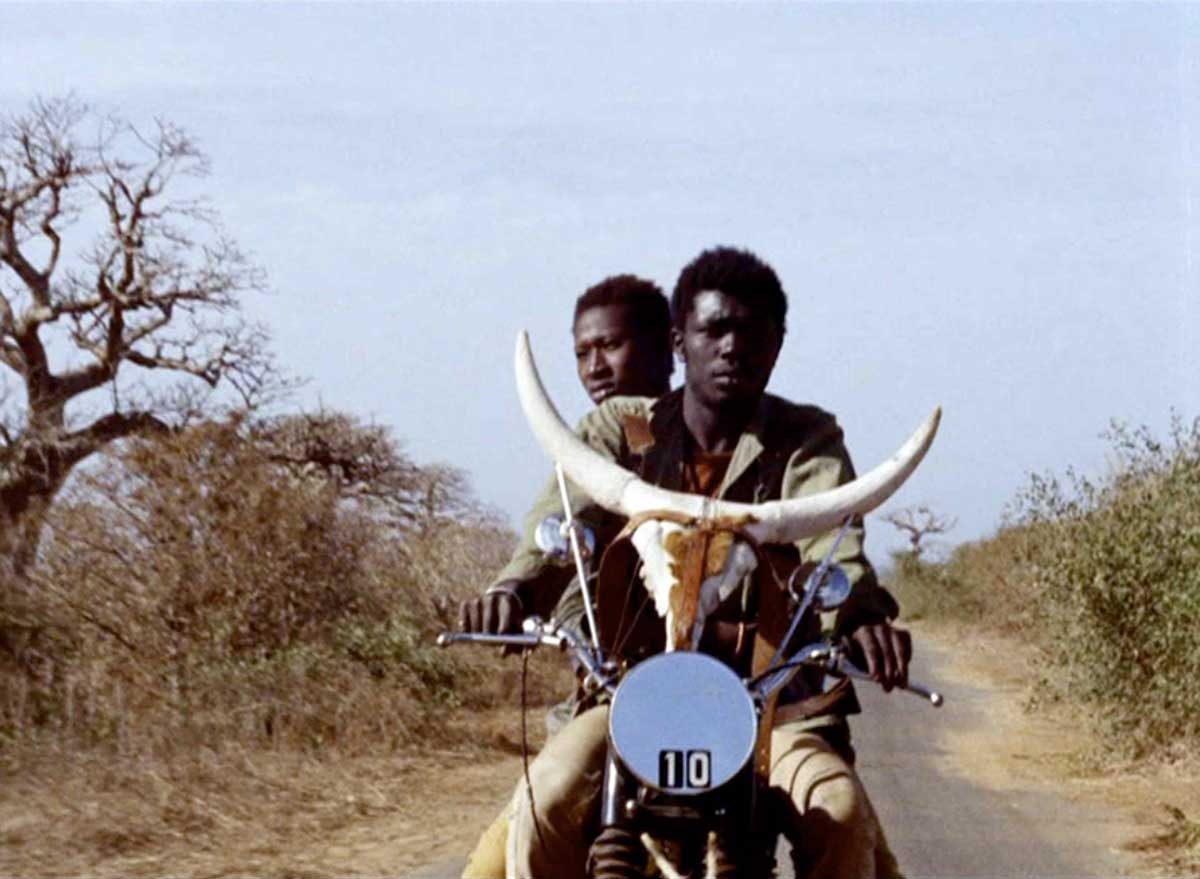
Con una mezcla asombrosa de lo surrealista y lo naturalista, Djibril Diop Mambéty pinta un retrato fracturado del desencanto de Senegal postindependencia a principios de la década de 1970. En esta fantasía-drama picaresca, los jóvenes desilusionados Anta y Mory, cansados de Dakar, ansían escapar a la gloria y las comodidades que imaginan que ofrece Francia, pero su plan se ve frustrado por obstáculos tanto prácticos como místicos. Alternando entre lo maníaco y lo meditativo, Touki bouki tiene una sensibilidad vanguardista caracterizada por imágenes vívidas, humor sombrío, edición poco convencional y paisajes sonoros ásperos, y demuestra el compromiso de Mambéty de contar historias africanas de nuevas maneras.
With a stunning mix of the surreal and the naturalistic, Djibril Diop Mambéty paints a fractured portrait of the disenchantment of postindependence Senegal in the early 1970s. In this picaresque fantasy-drama, the disaffected young lovers Anta and Mory, fed up with Dakar, long to escape to the glamour and comforts they imagine France has to offer, but their plan is confounded by obstacles both practical and mystical. Alternately manic and meditative, Touki bouki has an avant-garde sensibility characterized by vivid imagery, bleak humor, unconventional editing, and jagged soundscapes, and it demonstrates Mambéty’s commitment to telling African stories in new ways.
Touki Bouki (El Viaje de la Hiena) es una película dramática senegalesa de 1973 dirigida por Djibril Diop Mambéty. Se proyectó en el Festival de Cine de Cannes de 1973 y en el 8º Festival Internacional de Cine de Moscú.
La película fue restaurada en 2008 por el laboratorio Cineteca di Bologna/L'Immagine Ritrovata, en colaboración con el World Cinema Project de The Film Foundation y la familia del director Djibril Diop Mambéty. La restauración fue financiada por Armani, Cartier, Qatar Airways y la Qatar Museum Authority. Touki Bouki fue seleccionada como la 93ª mejor película de todos los tiempos en la encuesta de críticos de Sight and Sound.
Basado en su propia historia y guion, Djibril Diop Mambéty realizó Touki Bouki con un presupuesto de $30,000, obtenido en parte del gobierno senegalés. Aunque influenciado por la Nouvelle Vague francesa, Touki Bouki muestra un estilo propio. Su trabajo de cámara y banda sonora tienen un ritmo frenético poco característico de la mayoría de las películas africanas, conocidas por sus narrativas a menudo deliberadamente lentas y lineales. Sin embargo, se ha afirmado que los saltos de corte y los cambios espaciales radicales de la película están inspirados en las tradiciones orales africanas. La palabra "Bouki" en el título se refiere a un personaje popular del folclore, conocido por causar travesuras y engañar para obtener lo que quiere. A través de saltos de corte, montajes colisionantes, acompañamiento sónico disonante y la yuxtaposición de elementos visuales y sonoros premodernos, pastorales y modernos, Touki Bouki transmite y lidia con la hibridación de Senegal.
El cine de África Occidental contemporáneo a Touki Bouki estaba financiado y distribuido principalmente por la Oficina de Cine del Ministerio de Cooperación Francés, lo que aseguraba que los guiones debían ajustarse a los estándares cinematográficos aceptables para el Gobierno Francés. En contraste, Touki Bouki se realizó sin asistencia financiera francesa, lo que permitió a Mambéty una autonomía relativamente significativa en la producción de la película. La adopción de técnicas de la Nouvelle Vague francesa por parte de Mambéty estuvo en parte motivada por los escasos recursos financieros, circunstancias similares a las de los cineastas de la primera Nouvelle Vague francesa. Las técnicas narrativas y cinematográficas asociadas con el género Western (conocido por sus representaciones deshumanizantes de los nativos americanos y minorías) también fueron utilizadas de manera subversiva por Mambéty en la producción de la película.
Durante la producción de Touki Bouki, Mambéty fue arrestado por participar en protestas anti-racistas en Roma y fue liberado bajo fianza por abogados del Partido Comunista Italiano tras apelaciones de amigos como Bernardo Bertolucci y Sophia Loren. La experiencia de recibir una solicitud del Partido Comunista Italiano para compensarles por los gastos legales en su defensa sirvió de inspiración para un personaje en su película posterior, Hyènes.
En 2014, la banda británica Red Snapper lanzó Hyena, un álbum inspirado en Touki Bouki y con una imagen de portada de la película.
“Inspirado en la banda sonora reciente para la película de culto senegalesa de los 70 Touki Bouki, la primera película africana independiente que fue restaurada recientemente por Martin Scorsese y que es en sí misma una odisea afro-funk. Hemos realizado una gira con la película durante un año, tocando la banda sonora en vivo para audiencias de toda Europa; los temas de la banda sonora se han desarrollado y ampliado para formar Hyena.”
Touki Bouki (The Journey of the Hyena) is a 1973 Senegalese drama film directed by Djibril Diop Mambéty. It was screened at the 1973 Cannes Film Festival and the 8th Moscow International Film Festival.
Touki bouki fue restaurada en 2008 por el laboratorio Cineteca di Bologna/L'Immagine Ritrovata, en colaboración con el World Cinema Project de The Film Foundation y la familia del director Djibril Diop Mambéty. La restauración fue financiada por Armani, Cartier, Qatar Airways y Qatar Museum Authority. It was selected as the 93rd greatest film of all time by the Sight and Sound Critic's Poll.
Based on his own story and script, Djibril Diop Mambéty made Touki Bouki with a budget of $30,000 – obtained in part from the Senegalese government. Though influenced by French New Wave, Touki Bouki displays a style all its own. Its camerawork and soundtrack have a frenetic rhythm uncharacteristic of most African films – known for their often deliberately slow-paced, linearly evolving narratives. However, it has been asserted that the jump cuts and radical spatial shifts of the film are inspired by African oral traditions. The word "Bouki" in the title refers to a popular folk character, known for causing mischief and cheating his way to what he wants. Through jump cuts, colliding montage, dissonant sonic accompaniment, and the juxtaposition of premodern, pastoral and modern sounds and visual elements, Touki Bouki conveys and grapples with the hybridization of Senegal.
West African cinema contemporaneous with Touki Bouki was primarily financed and distributed by the French Ministry of Cooperation's Bureau du Cinema, which ensured that scripts had to conform to cinematographic standards acceptable to the French Government. Touki Bouki, in contrast, was made without any French financial assistance, allowing Mambéty relatively significant autonomy in production of the film. Mambéty's ready adoption of French New Wave techniques was to a degree motivated by meagre financial resources, circumstances similar to those of the film-makers of the early French New Wave. Narrative and cinematographic techniques associated with the Western genre (known for dehumanizing depictions of Native Americans and minorities) were also subversively utilized by Mambéty in the production of the film.
During the production of Touki Bouki, Mambéty was arrested for participating in anti-racist protests in Rome, and bailed out by lawyers from the Italian Communist Party after appeals from friends such as Bernardo Bertolucci and Sophia Loren. The experience of receiving a request from the Italian Communist Party to compensate them for the legal fees spent in his defence served as an inspiration for a character in his later film, Hyènes.
In 2014, British band Red Snapper released Hyena, an album inspired by Touki Bouki and featuring a cover image from the film.
"inspired by the band's recent soundtrack for cult 70s Senegalese road movie Touki Bouki, the first independent African film which was recently restored by Martin Scorcese and which is first and foremost an afro-funk odyssey in itself. Have toured with the film for a year, playing the soundtrack live to audiences across Europe; themes from the score have been developed and extended to form Hyena."