
Andy Warhol
Programa 1: Vinyl (1965)
* * *
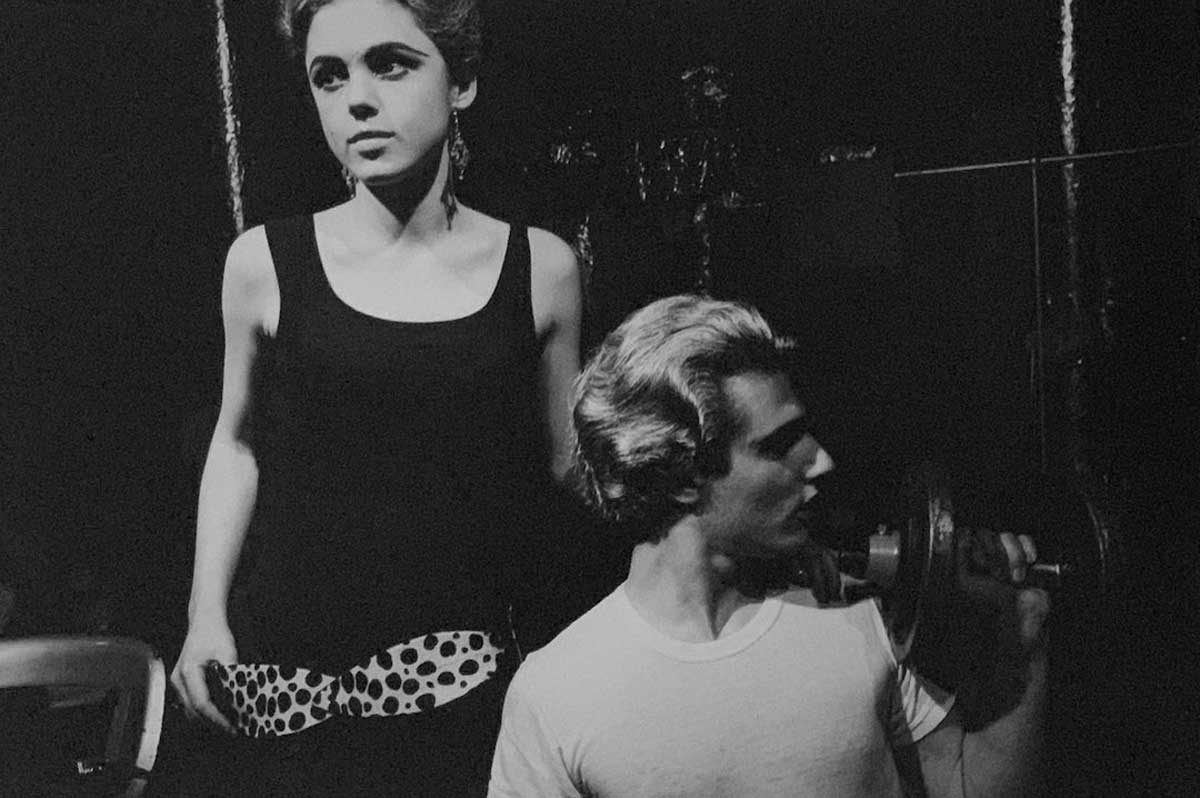
Vinyl fue la primera adaptación de la novela, que fue filmada seis años más tarde por Stanley Kubrick (como La naranja mecánica). Warhol compró el libro en la primavera de 1965 y se lo envió a su guionista Ronald Tavel. Afirmó que se había hecho con los derechos de la historia por 3.000 dólares. La película se basa únicamente en el original y reproduce la trama de forma muy condensada, y los nombres de los personajes también han cambiado. El rodaje de Vinyl tuvo lugar un día de abril / principios de mayo de 1965 con un presupuesto muy bajo y sin pruebas. La única localización de la película es un rincón de la Factory de Warhol, mientras que la cámara de 16 mm en blanco y negro, de la marca Auricon, estaba sobre un soporte y apenas se movía. En un principio, Vinyl iba a consistir en un casting puramente masculino en el que aparecería Gerard Malanga; pero como la modelo Edie Sedgwick, a la que Warhol había conocido a principios de ese mismo año, se presentó casualmente para ser fotografiada, Warhol le dio el papel de última hora en la tira. Algunos de los extras de Vinyl ni siquiera se dieron cuenta de que estaban siendo filmados y de que no tenían ninguna relación con la trama. La película incluye las canciones "Nowhere to Run" de Martha and the Vandellas, "Tired of Waiting for You" de The Kinks, "The Last Time" de The Rolling Stones y "Shout" de The Isley Brothers. "Nowhere to Run" se toca dos veces entera mientras los artistas la bailan. Vinyl se proyectó por primera vez el 4 de junio de 1965 como parte de la programación de la Film-Makers' Cinematheque de Jonas Mekas. La película de Stanley Kubrick de 1971, al igual que Vinyl, comienza con un primer plano del rostro del protagonista. No está claro por qué la película se llama Vinyl. A menudo se dice que Vinyl es la primera aparición de Edie Sedgwick en el cine, aunque en realidad apareció en un papel sin diálogos en la anterior película de Warhol, Horse (1965). Sedgwick no tiene ninguna línea de diálogo en toda la película. Vinyl se rodó sin ensayar y también se interpretó en directo en varias producciones teatrales.Vinyl is a 1965 American black-and-white film directed by Andy Warhol at The Factory. It is an early adaptation of Anthony Burgess' 1962 novel A Clockwork Orange, starring Gerard Malanga, Edie Sedgwick, Ondine, and Tosh Carillo, and featuring such songs as "Nowhere to Run" by Martha and the Vandellas, "Tired of Waiting for You" by The Kinks, "The Last Time" by The Rolling Stones and "Shout" by The Isley Brothers.
* * *
Vinyl was the first adaptation of the novel, which was filmed six years later by Stanley Kubrick (as A Clockwork Orange). Warhol bought the book in the spring of 1965 and forwarded it to his screenwriter Ronald Tavel. He had claimed that he had secured the right to the story for $3,000. The film is solely based on the original and reproduces the plot in a very condensed form and the names of the characters have also changed.
The recording of Vinyl took place on a day in April / early May 1965 with a very low budget and without samples. The only location in the film is a corner in Warhol's Factory while the 16mm black and white camera, the Auricon brand, stood on a stand and was barely moved.
Vinyl was originally supposed to consist of a purely male casting and bring out Gerard Malanga; but since the model Edie Sedgwick, who Warhol had met earlier the same year, coincidentally showed up for photography, Warhol gave her the last minute role in the strip. Some of the extras in Vinyl did not even realize that they were filmed and had no connection to the plot.
The movie features the songs "Nowhere to Run" by Martha and the Vandellas, "Tired of Waiting for You" by The Kinks, "The Last Time" by The Rolling Stones and "Shout" by The Isley Brothers. "Nowhere to Run" is played twice in full length while the artists dance to it.
Vinyl was shown the first time on June 4, 1965 as part of Jonas Mekas' Film-Makers' Cinematheque listing.
Stanley Kubrick's 1971 film, as well as Vinyl, begins with a close-up of the protagonist's face. Why the movie is called Vinyl is unclear.
Vinyl is often credited as Edie Sedgwick's first appearance in film, although she actually appeared in a non-speaking role in the earlier Warhol movie Horse (1965). Sedgwick has no lines of dialogue in the entire film. Vinyl was filmed unrehearsed and was also performed live in various stage productions.