
El paraíso perdido de Jack Smith
Programa 3: Normal Love (1963)
CENTRO CULTURAL D. MADRAZO
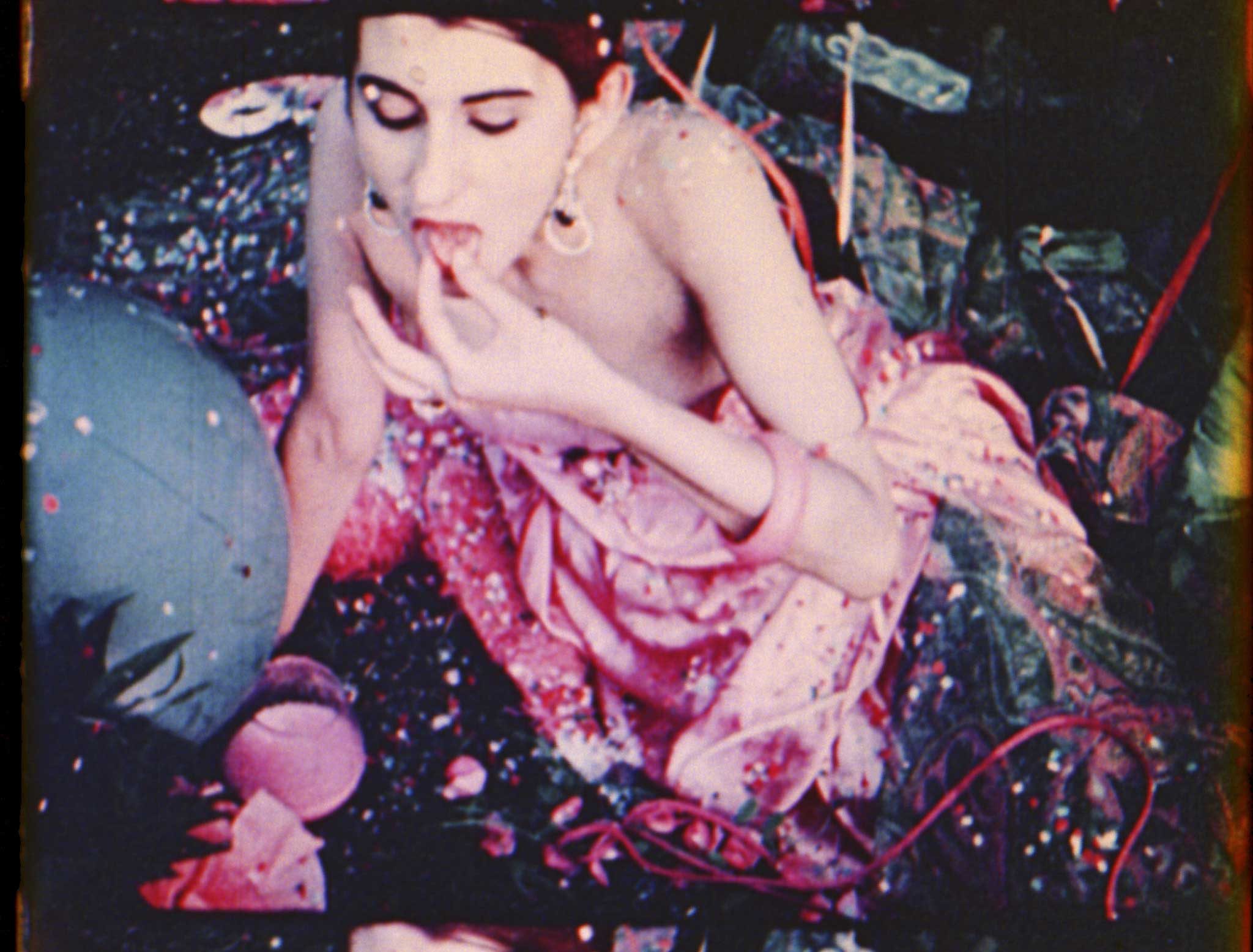
Programa:
– Normal Love (1963), 16mm, color, sonora, 120'
Formato de proyección: 16mm
NORMAL LOVE
«Después de la “pringosa”, lamentable recepción de Flaming Creatures en Nueva York, Jack Smith escribió en su diario “que no iba a aventurarse a hacer otra película que la gente de su ciudad no pudiera ver”. Esta declaración resultó profética. Smith nunca volvería a terminar otra película, al menos de forma convencional, pero decidió emprender otro proyecto. “Pasé el verano en el campo filmando una película maravillosa en colores rosa y verde que encarnará sin duda la quintaesencia del kitsch (pringoso). Todos los personajes visten trajes de noche rosas, hacen melindres y miran fijamente a la cámara.
(...) Si nos atenemos a las notas enviadas por Jack Smith a Tony Conrad para la banda sonora, la película consta de seis secciones. La primera escena es la escena roja: un interior con la Sirena y la Araña Negra precede a los créditos; sigue la escena con columpio a la Watteau, en la que la Chica es perseguida por un claro e impulsada en un columpio por el Hombre Sandía, que precede a la escena azul en la que criaturas groguis deambulan por un muelle, luego la escena verde en que aparecen la Momia y la mujer Cobra con su boa, la escena bucólica rodada en un campo lleno de vacas (que extiende el tema de la leche desde el baño de la sirena hasta la bebida de las criaturas), y para finalizar la famosa escena de la tarta.» –.Jim Hoberman.
«Lo esencial de la construcción de esta versión restaurada de NORMAL LOVE se basa en la cronología musical proporcionada por Tony Conrad, que figura en los créditos de la película. Según Tony, Jack rechazó la versión de la banda sonora que hizo. Pero la hoja de mezcla contiene una descripción de las escenas, que nos sirvió de guía para la restauración. El material de la bobina adicional no aparecía en la hoja de mezcla. Algunas secuencias, como la azul, la escena del muelle, la escena de la cobra con Beverly Grant, parecen faltar. La música que acompaña la restauración procede de la colección de discos de Jack». --Jerry Tartaglia.
Nueva copia de distribución cortesía de Jack Smith Archive y Gladstone Gallery, Nueva York y Bruselas.
«Après la navrante réception «pasty» de Flaming Creatures, à New York, Jack Smith écrivit dans son journal «qu'il n'allait pas s'aventurer à réaliser un autre film que les habitants de sa ville ne pourraient pas voir.» Cette déclaration s'avéra prophétique. Smith ne terminera jamais un autre film, tout au moins selon les conventions, ce qui le décida à entreprendre un autre projet. «Je passais ainsi l'été à la campagne à filmer un merveilleux film en couleurs rose et vert qui incarnera sans aucun doute la quintessence du kitsch (pasty). Tous les personnages portent des tenues de soirées roses, minaudent et fixent la caméra.»
(...) Si l'on s'en tient aux notes envoyées par Jack Smith à Tony Conrad pour la bande-son, le film comprend six sections. La première scène est la scène rouge: un intérieur avec la Sirène et l'Araignée noire précède le générique ; suit la scène à la Watteau avec balançoire dans laquelle la Fille est pourchassée dans une clairière et poussée sur une balançoire par l'Homme Pastèque, qui précède la scène bleue dans laquelle des créatures comateuses déambulent sur une jetée, puis la scène verte qui met en présence la Momie et la femme Cobra et son boa, la scène bucolique tournée dans un champ de vaches et donc étendant le thème du lait du bain de la sirène au breuvage des créatures, et pour finir la fameuse scène du gâteau.» Jim Hoberman.
«L'essentiel de la construction de cette version restaurée de NORMAL LOVE est basée sur la feuille de synchronisme musical fournie par Tony Conrad, crédité au générique du film. Selon Tony, la version de la bande sonore qu'il avait faite avait été refusée par Jack. La feuille de mixage contient, cependant, un descriptif des scènes ; elle nous a servi de conducteur pour la restauration. Le matériau sur la bobine supplémentaire n'apparaissait pas sur la feuille de mixage. Quelques séquences comme la séquence bleue, la scène de l'embarcadère, la scène du cobra avec Beverly Grant semblent manquer. La musique qui accompagne la restauration a été recueillie dans la discothèque de Jack.» Jerry Tartaglia.
Nouvelle copie de distribution avec l'aimable autorisation de Jack Smith Archive et Gladstone Gallery, New York and Brussels.
El cineasta y artista Jack Smith (1932-1989) reúne la Edad de Oro de Hollywood y la cultura underground, y se convirtió en icónica para las generaciones posteriores. Normal Love, el largometraje de Smith de 1963, está basado libremente en las películas de terror de los años 1930 y 1940, así como en el trabajo de la estrella de la serie B María Montez, de origen dominicano. Realizada después del tristemente célebre Flaming Creatures (1962-63), que atrajo la atención de los censores americanos, Normal Love incluye un elenco de personajes fantásticos que van desde una sirena, interpretada por Mario Montez (cuyo nombre artístico es un homenaje a la famosa actriz) y una momia, con la voz de Angus MacLise, el batería original de la banda neoyorquina The Velvet Underground. Filmada en color y con decorados complejos, incluido un pastel gigante diseñado por Claes Oldenburg, Normal Love es una combinación desenfrenada de parejas edénicas, libertinaje dionisíaco y terror kitsch. La presentación de la película va acompañada de una selección de fotografías y obras sobre papel de Smith que demuestran el uso inventivo del collage y el dibujo por parte del artista y resaltan su exuberante sensibilidad visual. – MoMA
Filmmaker and artist Jack Smith (American, 1932-1989) embraced the Golden Age of Hollywood and underground culture in equal measure, and became a notorious icon for later generations. Normal Love, Smith's 1963 feature-length film, is loosely based on horror movies, particularly from the 1930s and 40s, as well as the work of Dominican-born B-movie star Maria Montez. Made following Smith's infamous feature, Flaming Creatures (1962-63), which caught the unfavorable attention of American censors, Normal Love includes a cast of fantastical characters ranging from a mermaid, played by Mario Montez—whose stage name was conceived in homage to the famous actress—and a mummy, enacted by Angus MacLise, the original drummer for the New York band the Velvet Underground. Shot in color and using elaborate sets, including a giant cake designed by Claes Oldenburg, Normal Love is a riotous combination of Edenic coupling, Dionysian debauchery, and horror kitsch. The presentation of the film is accompanied by a selection of Smith's photographs and works on paper that demonstrate the artist's inventive use of collage and drawing and further showcase his exuberant visual sensibility. – MoMA
Normal Love es un proyecto cinematográfico experimental del director estadounidense Jack Smith. Muestra las aventuras de un conjunto de monstruos vestidos con glamour. Smith filmó el proyecto en 1963 y empezó a proyectar la obra en fragmentos en 1964.
Aunque Normal Love nunca se completó, a partir de él surgieron obras de Ron Rice, Andy Warhol y Tony Conrad. Después de la muerte de Smith, el proyecto tuvo su estreno, presentando dos horas de su metraje.
Rodaje
Tras el escándalo producido por su anterior película Flaming Creatures, Jack Smith pretendió hacer una continuación más accesible. Comenzó a rodar bajo el título provisional The Great Pasty Triumph. Smith escribió un plan detallado para filmar la película, pero lo mantuvo oculto para el reparto y el equipo. Jonas Mekas le suministró películas en color y financió su procesado. Smith realizó filmaciones a lo largo de un año. A menudo pasaba horas maquillando y disfrazando a los miembros del reparto, sumergiéndolos lentamente en la realidad de la película.
Smith era bien conocido como un devoto de la actriz de Hollywood María Montez. Él contó que ella tenía una estatua de su santo patrón en una capilla privada y hablaba con ella a diario, exigiendo que le trajera fortuna y admiración. Smith imitó esto y construyó un altar a Montez, donde le rezaba a diario, en un apartamento de la calle 14, Manhattan. Este santuario se convirtió en el escenario de las escenas de interiores de Normal Love, protagonizadas por la drag queen Mario Montez.
La secuencia de la tarta se rodó en agosto de 1963 en la casa de verano de Eleanor Ward en Old Lyme (Connecticut). El escultor Claes Oldenburg diseñó una gran tarta de madera sobre la que podían bailar los actores. El rodaje adicional se realizó en la casa de la mujer de mundo Isabel Eberstadt, en Cherry Grove.
Fotografía
Smith utilizó una combinación de colores rosa y verde para Normal Love, dándole a la película una calidad pastoral. Le interesaba el uso del color de los pintores barrocos como Jean-Antoine Watteau. A veces, Smith hizo pintar los animales o el follaje donde estaba filmando. Creó composiciones densas utilizando humo, vegetación o telas que permiten a los actores mezclarse con la escenografía. Gran parte de la estética de la película está influida por White Savage, una película de aventuras de 1943 protagonizada por María Montez.
Banda sonora
Smith no grabó sonido sincronizado para Normal Love y contrató a Tony Conrad para producir la banda sonora. Conrad había hecho la banda sonora de Flaming Creatures y aparece en Normal Love como la momia. La lista de acotaciones que Smith le dio a Conrad especifica tambores africanos y música clásica alegre en la escena del swing, así como sonidos de insectos, pájaros y ranas para las escenas del pantano y la fiesta. Smith también planeó incorporar música popular a la banda sonora; sus notas especifican "The Monkey Song" de Hoagy Carmichael y "Walkin' After Midnight" de Patsy Cline, y Amália Rodrigues. En octubre de 1963, publicó una nota en The Village Voice anunciando un concurso. Pidió a los aspirantes que enviaran grabaciones al estilo de María Montez diciendo: "Cada vez que me miro al espejo podría gritar de lo guapa que soy".
En el set, Conrad conoció a la actriz Beverly Grant, que interpretaba a la Mujer Cobra. Los dos entablaron una relación, que Smith consideró una traición contra él. Smith y Conrad se enfadaron, y la banda sonora se malogró. Angus MacLise y Walter De Maria hicieron interpretaciones de música en vivo para acompañar a las secuencias de la película que se proyectaron.
Estreno
A Smith le preocupaba que alguien pudiera copiar o apropiarse de su obra, por lo que dejó Normal Love como work in progress. Mientras la película aún estaba en fase de producción, Smith organizó proyecciones de los rushes. De 1963 a 1965, presentó copiones y montajes preliminares en la FilmMaker's Cinematheque y en el loft de Ron Rice. A menudo editaba la película desde la cabina de proyección durante estas sesiones. Al quitar el rollo receptor del proyector, pudo usar cinta para volver a empalmar la película con el proyector en funcionamiento. Esta técnica permitió a Smith ampliar la duración de las proyecciones, que llegaban a durar hasta cuatro horas. También experimentó dando la vuelta a la tira de película para que las imágenes repetidas aparecieran invertidas de izquierda a derecha. Cuando la luz del proyector incide sobre la base de la película antes que en la emulsión, produce imágenes con colores más tenues y turbios.
Después de la muerte de Smith, el cineasta Jerry Tartaglia trabajó en la conservación y restauración de Normal Love. Dado que Smith había integrado material de Normal Love en otras películas y performances, este estaba disperso en muchos rollos. Tartaglia utilizó notas escritas y relatos verbales de quienes habían visto la película para identificar las imágenes. La continua labor de remontaje de Smith deterioró físicamente una gran parte de la película.
Restauración
Para volver a montar el material, Tartaglia trabajó a partir de una copia del esquema de Smith preparado por Conrad, junto con la lista de acotaciones que Conrad había preparado para la banda sonora. Esta procede de discos de la colección de Smith, muchos de los cuales él mismo hacía sonar al proyectar secuencias de la película.
Obras relacionadas
Yellow Sequence es una adenda de 15 minutos a Normal Love, que toma su nombre de las notas de Smith. Está protagonizada por Francis Francine, Tiny Tim y David Sachs. En la secuencia, Francine muere en un campo de flores doradas mientras Tiny Tim toca un ukelele de plástico sentado encima de un coche abandonado. Las escenas de Francine se rodaron primero y después se agregaron las escenas adicionales, cuando desaparecieron los rollos de la película. Dado que Yellow Sequence no aparece en las notas cronológicas de Smith, Tartaglia decidió mantenerla separada del resto de las secuencias de Normal Love, y muchas proyecciones la incluyen como epílogo. Smith también agregó imágenes no utilizadas de Normal Love a su película de 1966 Respectable Creatures.
A finales de los años 1960, Smith comenzó a utilizar metraje de Normal Love en obras de teatro y performances. Los rollos de las performances Exotic Landlordism y Cement Lagoon incluyen imágenes que aparentemente no estaban destinadas a ser incluidas en Normal Love.
Otros cineastas
Una de las primeras películas de Andy Warhol fue Andy Warhol Films Jack Smith Filming "Normal Love", un noticiario mudo de cuatro minutos que muestra el rodaje de Normal Love. La película se proyectó con Flaming Creatures de Smith en el New Bowery Theatre. Durante la tercera proyección del programa el 3 de marzo de 1964, el Departamento de Policía de Nueva York confiscó ambas películas y acusó al personal de la sala de proyectar una película obscena. Las condenas fueron anuladas en apelación, pero la policía no devolvió la única copia de la película de Warhol, que actualmente se considera perdida.
El cineasta Ron Rice acompañaba a menudo a Smith al rodaje de Normal Love. Smith y los miembros del reparto se reunían a veces en el loft de Rice después de completar las sesiones de rodaje, todavía con el vestuario de la película. Rice documentó estas visitas en su película Chumlum de 1963.
En marzo de 1963, Smith, Conrad y Montez hicieron experimentos de proyección con una velocidad de fotogramas reducida para producir un efecto de flicker (parpadeo). Impresionado por los resultados, Smith planeó incorporar esta técnica en Normal Love. Después de que Conrad y Smith se enfadaran, los efectos de flicker que Conrad había descubierto terminaron por dar lugar a su película abstracta The Flicker.
Normal Love is an experimental film project by American director Jack Smith. It shows the adventures of an ensemble of glamorously dressed monsters. Smith filmed the project in 1963 and began screening the work in pieces in 1964.
Although Normal Love was never completed, works by Ron Rice, Andy Warhol, and Tony Conrad grew out of it. After Smith's death, the project was released as a two-hour presentation of his footage.
Filming
After the scandal produced by his previous film Flaming Creatures, Jack Smith sought to make a more approachable follow-up. He began shooting under the working title The Great Pasty Triumph. Smith wrote out a detailed plan for shooting the film but kept it hidden from cast and crew members during production. Jonas Mekas supplied him with color film and funded the film processing. Smith held shoots over the course of a year. He would often spend hours on makeup and costumes for the cast, slowly immersing them in the reality of the film.
Smith was well known as a devotee of Hollywood studio actress Maria Montez. He told of an account that she had kept a statue of her patron saint in a private chapel and spoke to it daily, demanding that it bring her fortune and admiration. Smith emulated this and built an altar to Montez, where he prayed to her daily, in an apartment on 14th Street, Manhattan. This shrine became the set for the interior scenes of Normal Love, featuring drag queen Mario Montez.
The film's cake sequence was shot in August 1963 at Eleanor Ward's summer home in Old Lyme, Connecticut. Sculptor Claes Oldenburg designed a large wooden cake on which the actors could dance. Additional filming happened at socialite Isabel Eberstadt's home in Cherry Grove.
Cinematography
Smith used a pink and green color scheme for Normal Love, giving the film a pastoral quality. He was particularly interested in how Baroque painters like Jean-Antoine Watteau used color. Smith would sometimes paint the animals or foliage where he was filming. He created dense compositions using smoke, vegetation, or fabric that allow the actors to blend into the set design. Much of the film's aesthetic is influenced by White Savage, a 1943 adventure film starring Maria Montez.
Soundtrack
Smith did not record sync sound for Normal Love and enlisted Tony Conrad to produce the soundtrack. Conrad had made the soundtrack for Flaming Creatures and appears in Normal Love as the mummy. Smith's cue sheet for Conrad specifies African drums and joyful classical music in the swing scene, as well as the sound of insects, birds, and frogs for the swamp and party scenes. Smith also planned to incorporate popular music into the soundtrack; his notes specify Hoagy Carmichael's "The Monkey Song" and Patsy Cline's "Walkin' After Midnight", and Amália Rodrigues. In October 1963, he posted a notice in The Village Voice announcing a competition. He called for contestants to submit recordings in the style of Maria Montez saying, "Every time I look into the mirror I could scream because I am so beautiful."
On set, Conrad met actress Beverly Grant, who played the Cobra Woman. The two entered a relationship, which Smith regarded as a betrayal against him. Smith and Conrad fell out, and the soundtrack was not created. Angus MacLise and Walter De Maria have performed live accompaniment when sequences from the film were screened.
Release
Smith was worried that his work would be reproduced or co-opted, so he left Normal Love as a work in progress. While the film was still in production, Smith arranged screenings of the rushes. From 1963 to 1965, he unveiled rushes and rough cuts at the Film-Makers' Cinematheque and at Ron Rice's loft. He would often edit the film from the projection booth at screenings. By removing the projector's takeup reel, he could use tape to re-splice the footage while the projector was running. This technique allowed Smith to extend the duration of the screenings, which could run as long as four hours. He also experimented with flipping the filmstrip so that repeated images would appear reversed from left to right. When the light from the projector hit the film base before the emulsion, it produced images with dimmer, murkier colors.
After Smith's death, filmmaker Jerry Tartaglia worked on the preservation and restoration of Normal Love. Because Smith had integrated material from Normal Love into other films and performance pieces, it was scattered across many reels. Tartaglia used written notes and verbal accounts of the film to identify the images. Smith's continual re-editing physically damaged much of the film.
Restoration
To reassemble the footage, Tartaglia worked off of a copy of Smith's outline that Conrad had made along with a cue sheet that Conrad had prepared for the soundtrack. The soundtrack consists of records that Smith owned, many of which Smith played when presenting the sequences.
Related works
Yellow Sequence is a 15-minute addendum to Normal Love, taking its name from notes by Smith. It stars Francis Francine, Tiny Tim, and David Sachs. In the sequence, Francine dies in a field of golden flowers as Tiny Tim plays a plastic ukelele while perched on top of an abandoned car. Francine's scenes were shot first, and the additional scenes were added after the film reels went missing. Because Yellow Sequence does not appear in Smith's chronology notes, Tartaglia decided to keep it separate from the rest of the Normal Love sequences, and many screenings include it as an epilogue. Smith also added unused footage from Normal Love to his 1966 short film Respectable Creatures.
During the late 1960s, Smith began using footage shot for Normal Love as part of theater and performance works. Performance reels for both Exotic Landlordism and Cement Lagoon include images ostensibly not intended for inclusion in Normal Love.
Other filmmakers
One of Andy Warhol's earliest films was Andy Warhol Films Jack Smith Filming "Normal Love", a four-minute silent newsreel showing the production of Normal Love. The film screened with Smith's Flaming Creatures at the New Bowery Theater. During the program's third screening on March 3, 1964, the New York City Police Department seized both films, charging the theater staff with showing an obscene film. The convictions were overturned on appeal, but police did not return the only print of Warhol's film, and it is now considered lost.
Filmmaker Ron Rice often accompanied Smith to the shoots for Normal Love. Smith and the cast members sometimes congregated at Rice's loft after shooting was complete, still in their costumes from the film. Rice documented these visits in his 1963 film Chumlum.
In March 1963, Smith, Conrad, and Montez experimented with projecting film at a reduced frame rate to produce a flicker effect. Impressed by the results, Smith planned on incorporating this technique into Normal Love. After Conrad and Smith fell out, the flicker effects that Conrad had devised eventually led to his abstract film The Flicker.
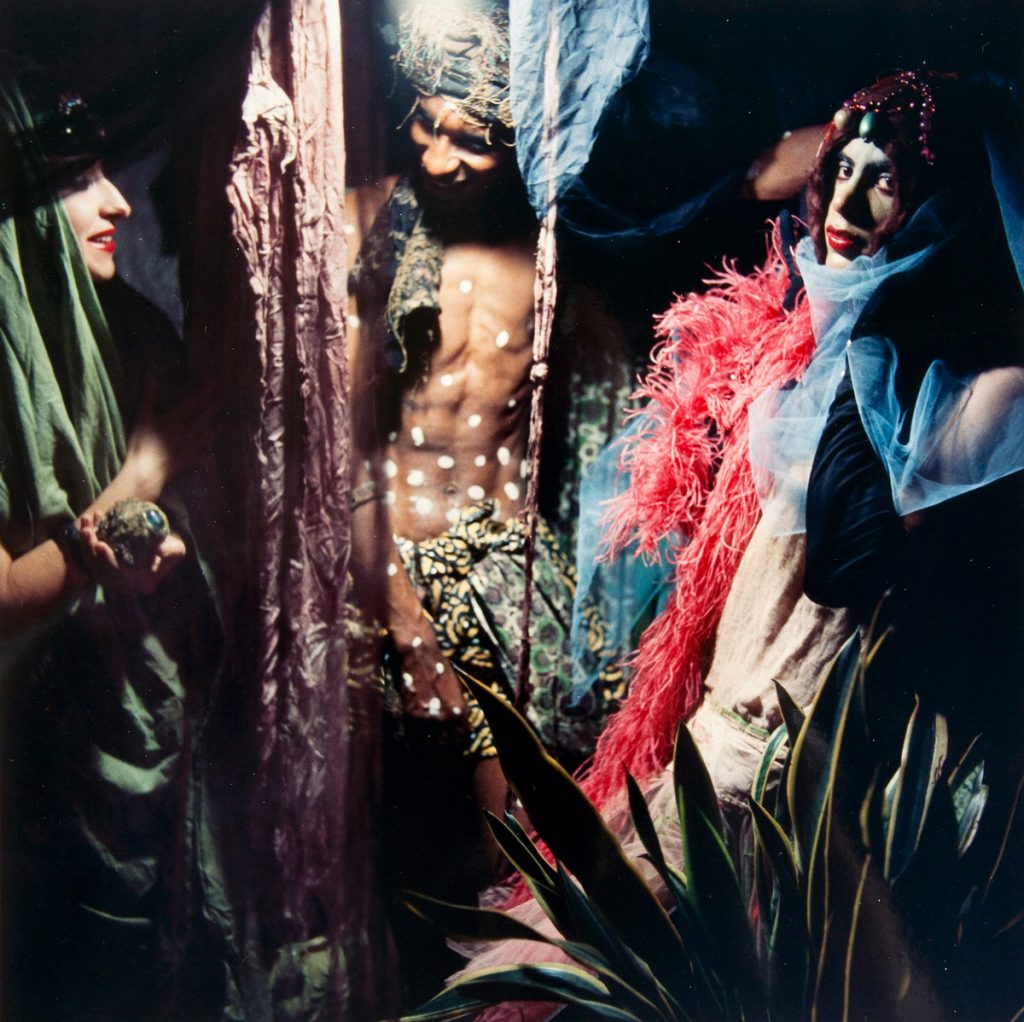
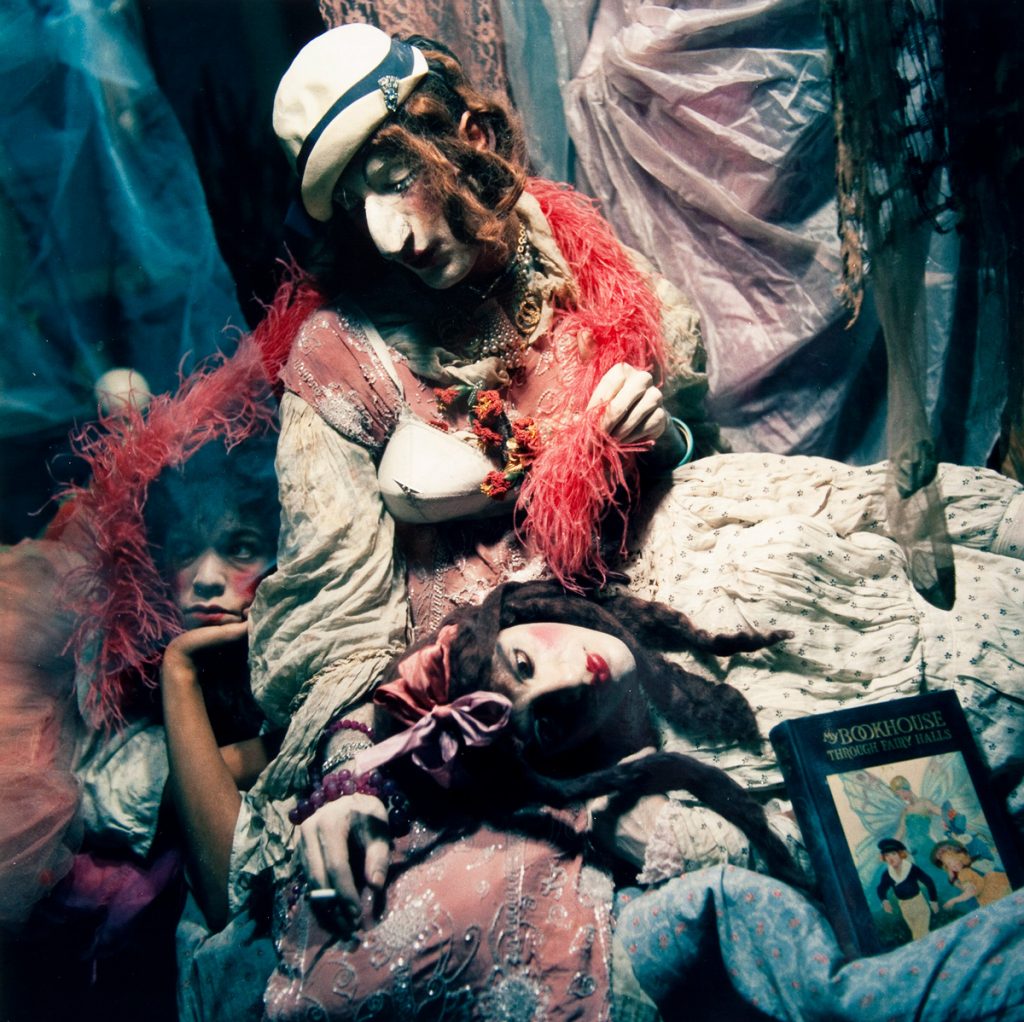
WHAT IS NORMAL LOVE?
Isla Leaver-Yap
Normal Love is a 16mm color film by Jack Smith, shot in 1963, and shown in 1964. But Normal Love was not always Normal Love; the work was also called Normal Sex, The Great Moldy Triumph, The Great Pasty Triumph, The Pink and Green Film, The Pink and Green Horrors, The Rose and Green Horror, The Moonpool Film, and The Drug Film. And, in its initial incarnation, it was a short story about freaks, sex, and God. In its ineluctable multiplicity, Normal Love must be examined as emblematic of Smith’s legacy as a whole: it exists in many versions, is unfixed, and difficult to fully account for in textual form.
To consider the film Normal Love, then, one must first consider the personality, the ideals, and the life of Jack Smith. He was a perpetual revisionist; his art was always evolving and his work was all-consuming—of effort, of others, and of time that insisted on the priority of the present moment. Throughout his life as an artist, Smith worked in various modes: composing vibrant and exquisite photographic images that resemble film stills for nonexistent films; presenting performances in his New York loft apartment that ran for unspecified lengths of time and drew improvised players from the audience in attendance; and continuously reediting his films as they spooled through the projector. The fact that Normal Love is both referred to as an “unfinished” and a “complete” film underscores the paradox of discussing it at all. [1]
In an interview with poet and artist Gerard Malanga, Smith responded to the question of whether his audience would ever understand his films. “[The] appeal is not to the understanding,” Smith explained, but to “movement and gesture.”[2] This drive is continually foregrounded both in Normal Love’s content and Smith’s intended form of interventionist display, both of which will be discussed further. An interpretation of Normal Love relies on various forms of remembrance and documentation as well as on Jerry Tartaglia’s edited version of the film that was completed after Smith’s death. Such an interpretation also carries with it an unavoidable sense of irony, given that the persona and the films of Jack Smith are most clearly characterized by their relentless desire to shun the ossifying structures of reason and methodology. It is a purposefully indeterminate work that drew much of its energy from the presence of its maker who, in his live edits, literally cut the work to pieces again and again. Despite this, the rich half-life of the persisting versions of Normal Love available to us still inspires contemporary scholarship that articulates the work’s exceptionalism. It revels in sensuality over sense, without a responsibility to narrative logic or even its own preservation and posterity. And although Normal Love’s exotic, violent, desirous, and foreign inflections are the mainstays of Hollywood cinema of the time, for Smith these tropes were also leveraged as emblems of an inner queerness, which marginalize the average, traditional, and general, and prioritize the abnormal and fantastic. Normal Love never attempts to “pass” as truly authentic, but enacts attributes of an ideal self. This is the normal love.
MAKING NORMAL LOVE
Although Smith embarked on several theatrical productions throughout his artistic life, dating from the early 1960s to the late 1980s, when he was dying of AIDS, the early development of his theatrical persona was crafted through the dissemination of image form, either through photography or film. The artifice of the image, its hermetic and highly choreographed quality, offered Smith a fantastical space uncorrupted by the humdrum “normal” life that he continually railed against. While the theatrical productions were fueled by Smith’s antagonism to the expectations of the audience, his films and photographs were glimpses into an ideal that might be aspired to and emulated. But most fundamentally, these works were based on real activities, performances, and moments that occurred in exception to societal norms. Reflecting on the 1960s New York scene, performance artist Penny Arcade describes the porousness between being and performing certain behaviors within Smith’s social and artistic circles:
Everybody performed all the time. It was a way of entertaining yourself and entertaining your friends. But it wasn’t self-conscious. It wasn’t like somebody was on all the time. It was a way of mediating your own personality. We didn’t have any model for the kinds of people we were. We were freaks in the real sense that we were not normal and were pegged as not being normal. [3]
As a film, Normal Love encapsulates Arcade’s analysis, not simply through its tongue-in-cheek title, but because it falls somewhere between a performance of bacchanalian excess and a motion picture document of the experiences of those who worked on it. The development of the film and the process of its making becomes therefore integral to considering the work not only a means to an end but also as a crucial activity in its own regard. Any analysis of Normal Love relies heavily on the anecdotes of those who were present during filming, along with Smith’s own preparatory notes. [4] Both of these forms of reflection function as complements to the 1997 print, which was assembled and restored by the artist’s friend and collaborator Jerry Tartaglia and now serves as the primary screening version of Normal Love distributed by Smith’s estate. While the limitations of the personal journal, the anecdote, and a posthumously edited film are not difficult to ascertain, these documents nonetheless provide the foundation for the current analysis.
Normal Love was largely developed and shot during the summer and autumn of 1963. The film emerged at a highly specific moment, both in terms of the development of Smith’s own artistic practice and also in the context in which he was living—namely the New York avant-garde scene and its increasingly fraught relationship to censorship. While already known for his performances in the 16mm shorts made by painter and filmmaker Ken Jacobs in the 1950s, Smith was also recognized as a photographer, operating out of the Hyperbole Photography Studio, which he began in a storefront on Manhattan’s Lower East Side in 1957.[5] As Marc Siegel notes, “The studio was less an opportunity to take commercial photos, than a chance at incorporating passersby into Smith’s elaborately staged, exotic and erotic photo shoots.”[6] Harnessing the relatively cheap medium of C-print photography, Smith’s vibrant figurative images move between fantasy and document. Visually, these photographs approach the appearance of production stills, though their corresponding films were never made or indeed planned.[7] These early photographs, which stage fantastical desires in erotic and elaborate tableaux, can be seen as clearly linked to the staging and fantastical enactments that appear in Normal Love.
While the storefront housed early shoots, Smith, like many New York artists of the 1960s, increasingly used the private space of his loft apartment as a central creative site. Venturing out into New York, he also found ad hoc movie sets among the semi-public spaces of Manhattan’s rooftops and industrial wastelands, employing these as safe and unregulated spaces of production and social collaboration. It was in one such wasteland that Smith, during the filming of Jacobs’s Star Spangled to Death (1957–1959), came to make Scotch Tape (1959–1962)—a three-minute 16mm film shot using Jacobs’s Bell and Howell camera; and it was on a rooftop of a now-destroyed New York movie house that Smith would later use to shoot his epic Flaming Creatures (1963).[8]
Necessary to a project of its scale and ambition, Normal Love was developed with the help of a large number of friends and collaborators, which included Smith’s frequent ensemble cast of figures. Among them were Sheila Bick, Francis Francine, Tony Conrad, and René Rivera—whom Smith enduringly renamed Mario Montez during the shooting of Normal Love (and who will be referred to in this essay as such). Bick, Francine, and Rivera had variously appeared in Smith’s photographic works that the artist shot in his loft between 1958 and 1962, and had also performed in Flaming Creatures. Conrad, a violinist and recent Harvard graduate, had previously assisted Smith on the soundtrack for both Flaming Creatures and Scotch Tape.
More financially stable admirers and enthusiasts were on hand to deliver the outdoor locations for the shoot—vital to Smith’s escape from New York City’s increasingly patrolled spaces.[9] An estate belonging to Stable Gallery owner Eleanor Ward in Old Lyme, Connecticut, was used as a backdrop (Wynn Chamberlain was renting it at the time) as were the premises of collector Isabel Eberstadt on Fire Island’s Cherry Grove and Joan and Bob Adlers’s 14th Street apartment in New York City.[10] Meanwhile, Jonas Mekas, working under the auspices of the New York Film-Makers’ Co-op, which he had founded in 1961, paid out checks for the film stock and printing.